
A work outfit is a daily negotiation between three judges: the dress code, the calendar (board meeting or quiet Friday?), and the mirror. The women who look effortlessly professional have simply solved the equation in advance — a wardrobe of pieces that combine predictably, fit the body they have today, and survive a full day of sitting, walking, presenting and commuting.
This list collects 59 work outfits: by dress code (formal, business casual, creative), by piece (blazers, pantsuits, work dresses), by profession and by life stage — including interviews, video calls, and working from home. Screenshot your favourites; start here.
1. Classic Work Outfit

The classic work outfit — tailored trousers or a pencil skirt, a blouse or fine knit, a blazer, closed shoes — is professional dressing’s template: the combination every office on earth recognises. It works because every element signals intention.
Fit is the classic’s entire secret. This outfit is the interview-to-boardroom constant.
2. Modern Work Outfit
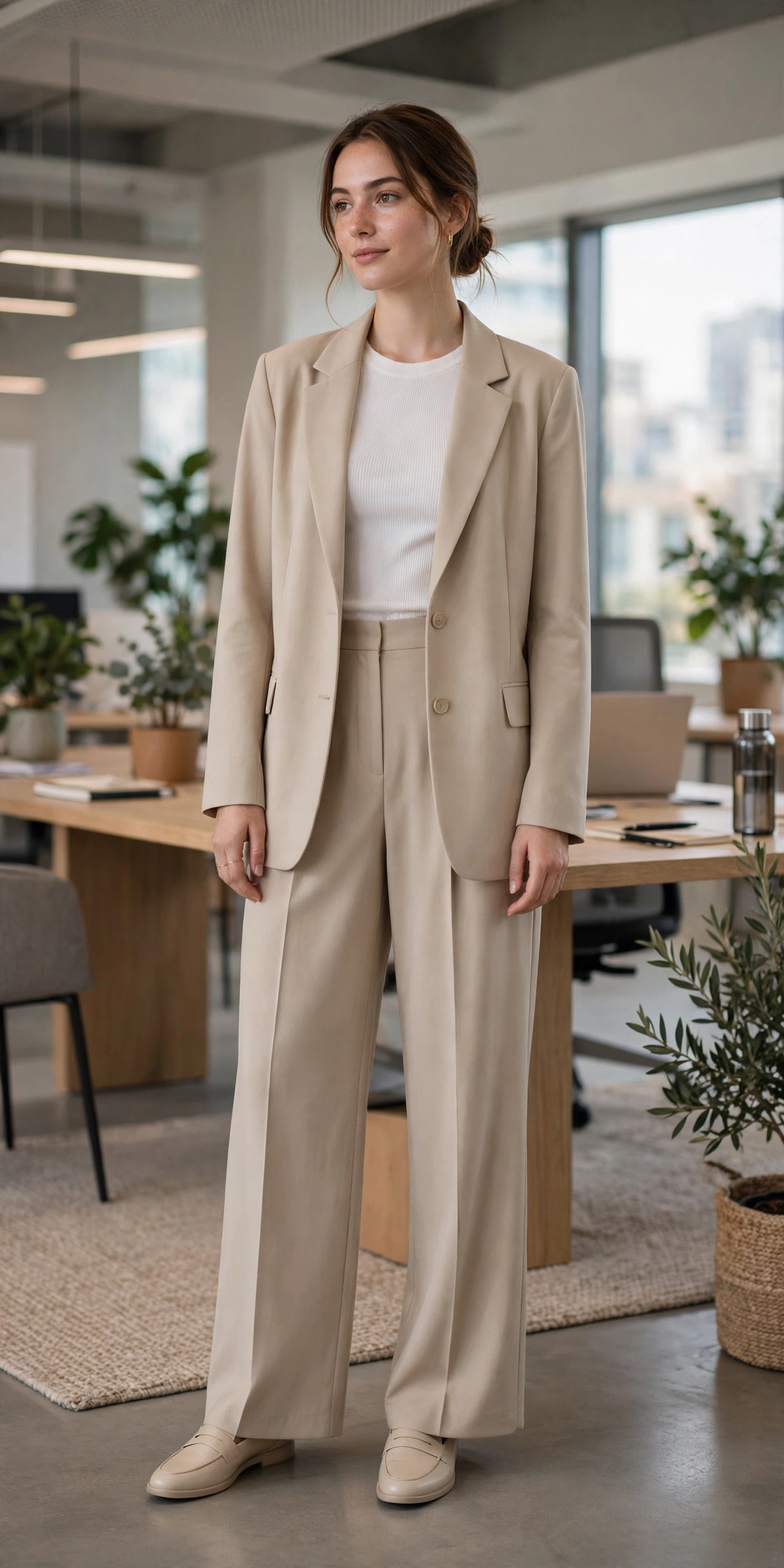
Modern work dressing relaxes the classic: softer tailoring, knit pieces, loafers and clean sneakers where codes allow, monochrome and neutral palettes. The modern outfit keeps the polish and drops the stiffness.
Structure in one piece, ease in the rest. Modern work style is authority, unbothered.
3. Professional Office Outfit
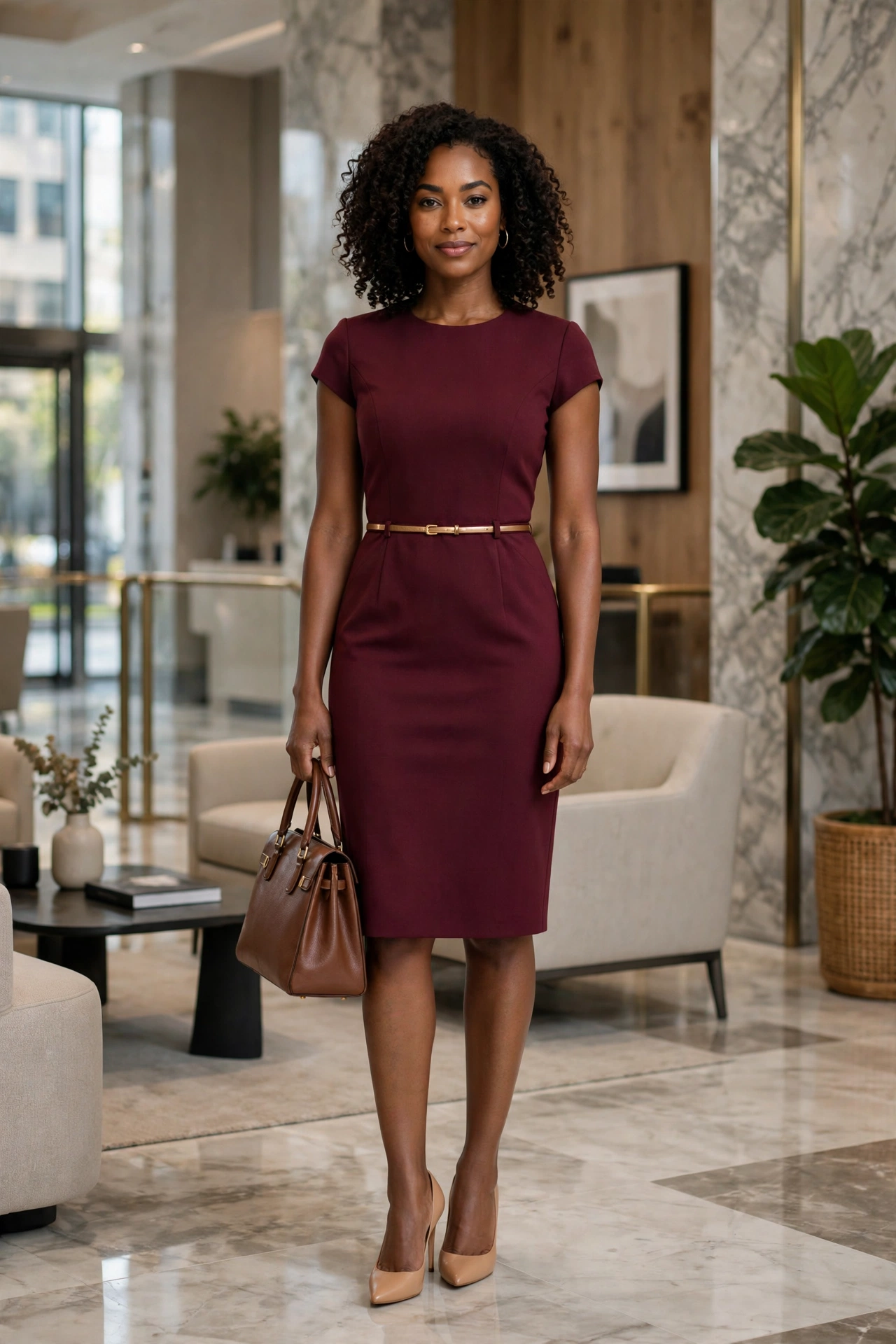
The professional office outfit is the full register: matched or coordinated tailoring, quality fabrics, groomed finish — for client-facing days and leadership visibility. Professional dressing is a credibility tool; use it deliberately.
This is the outfit for the days your competence will be photographed. Dress like the report’s conclusion.
4. Business Casual Outfit

Business casual is the world’s most common dress code and its most misread: tailored pieces without the suit — chinos or trousers, knits, loafers, unstructured blazers. The line is ‘would this work meeting a client with an hour’s notice?’
One tailored piece keeps business casual honest. This code rewards a uniform of reliable combinations.
5. Business Formal Outfit

Business formal — matched suits, dresses with jackets, closed heels or oxfords — governs law, finance, and executive floors. Formal dressing is armour and etiquette in fabric form.
Tailoring is non-negotiable at this register. Formal is the dress code as a respect signal.
6. Blazer Work Outfit
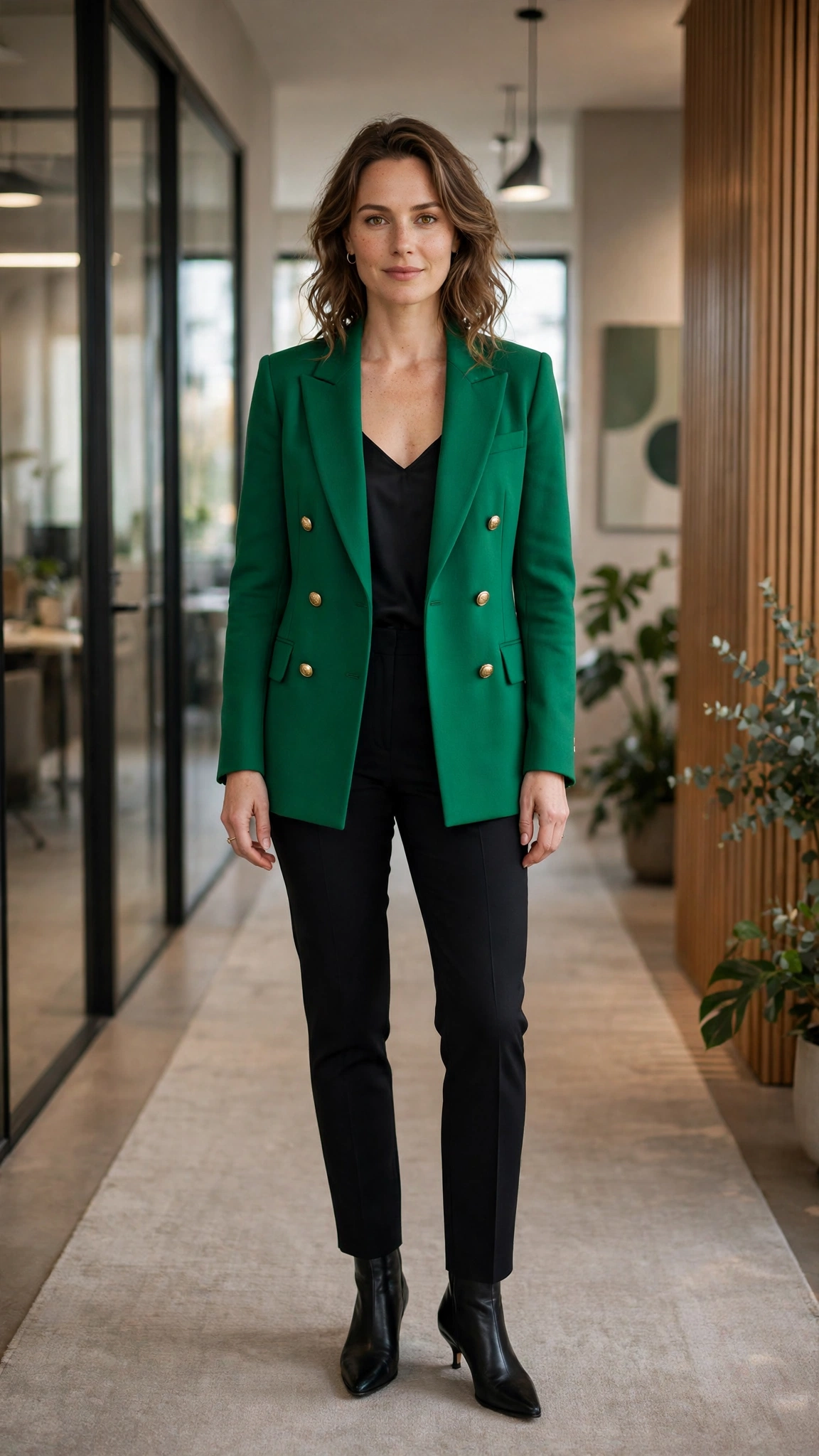
The blazer is work dressing’s hardest worker: it formalises jeans, completes dresses, and turns a plain top into a meeting outfit in four seconds. Every work wardrobe needs one perfect blazer per season.
Shoulders first — the blazer’s fit lives there. This piece is a promotion’s costume and a day’s rescue.
7. Women’s Suit Work Outfit

A women’s suit — matched jacket and trousers or skirt — is the complete professional statement: nothing to coordinate, everything communicated. Modern suits offer colour and softness the old uniform never allowed.
A suit is a decision made once, worn all day. It is the wardrobe’s exclamation mark.
8. Pantsuit Outfit

The pantsuit specifically — trousers matched, practical, powerful — suits the days of movement: site visits, conferences, travel-for-work. Pantsuits photograph as authority in every era’s style.
Trouser length to the shoe is the pantsuit’s detail. This outfit walks into rooms correctly.
9. Work Dress Outfit
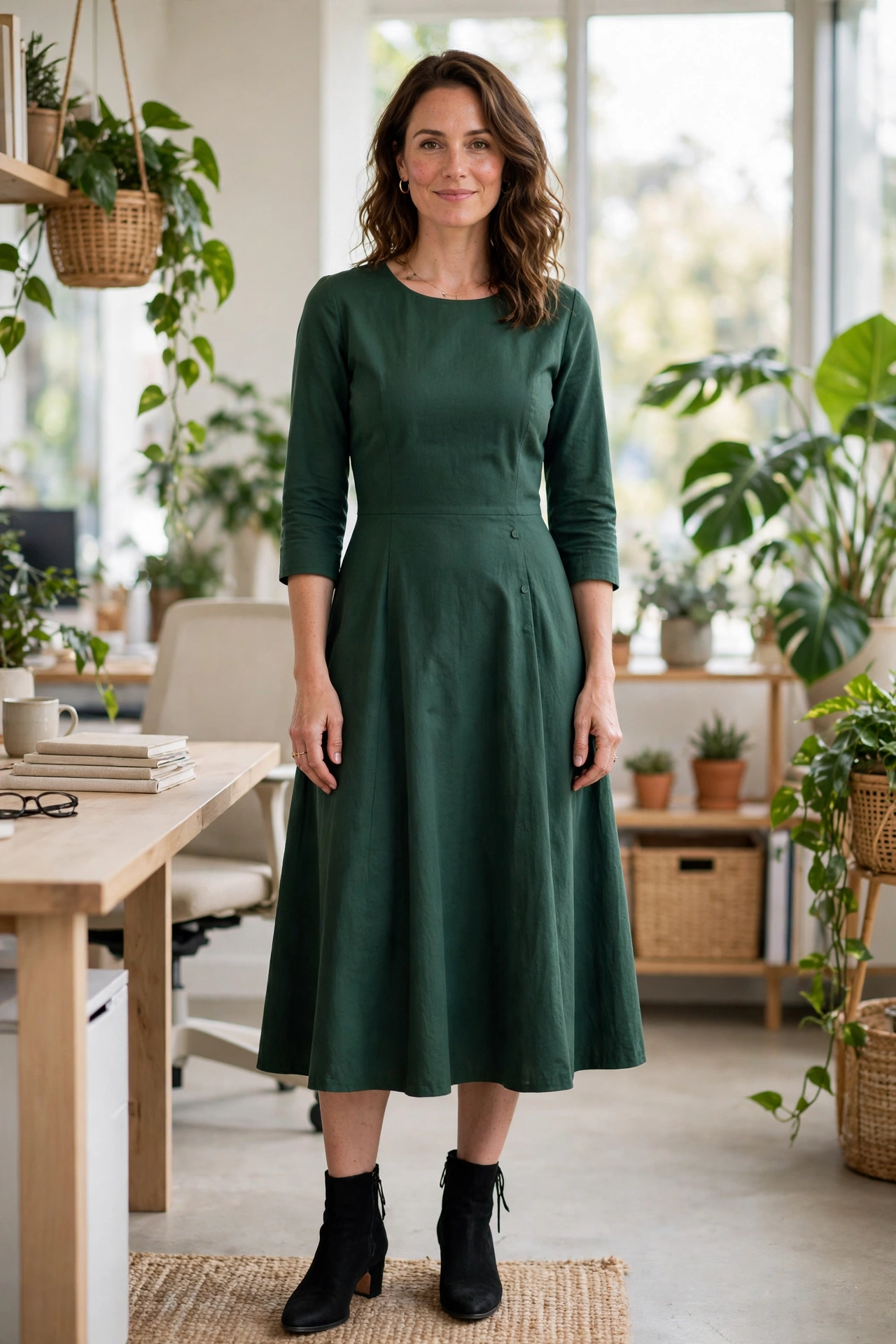
The work dress is one-piece professionalism: sheath, wrap, and shirt dresses that end the morning’s coordination problem. A great work dress plus a blazer is a complete system.
Dresses must sit, walk and reach comfortably — test all three. This is efficiency, tailored.
10. Midi Dress Work Outfit
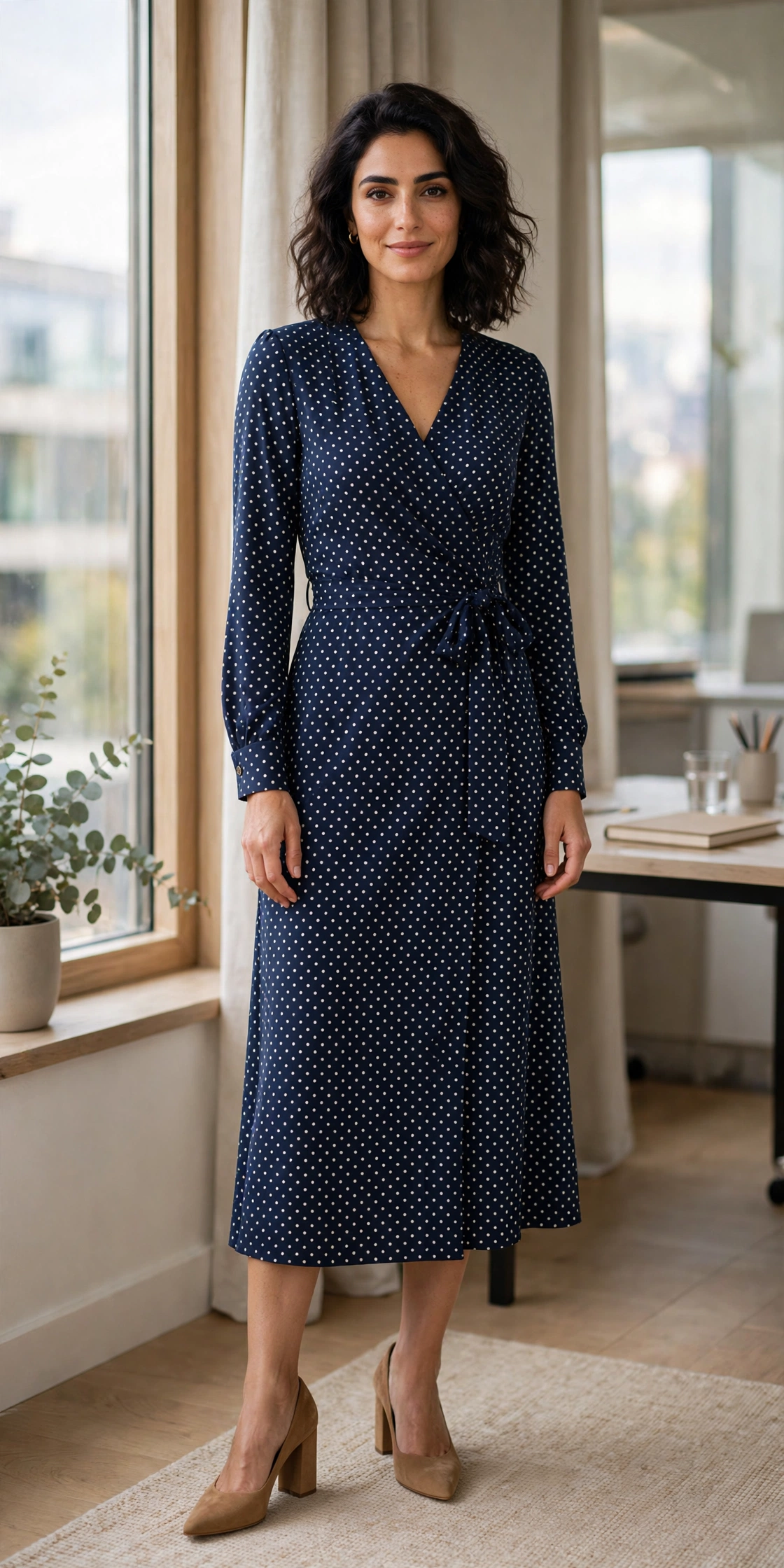
Midi dresses are the office’s favourite length: covered, elegant, season-flexible with boots or heels. The midi work dress suits conservative and creative offices alike.
The midi is the safest compliment in work dressing. Own two; rotate with blazers.
11. Pencil Skirt Work Outfit

The pencil skirt is tailored work dressing’s icon: a clean line with blouses, knits and blazers. Pencil skirts suit hourglass and straight figures and every formal register.
The pencil skirt must allow a full stride. This silhouette is a signature for many careers.
12. Skirt Work Outfit
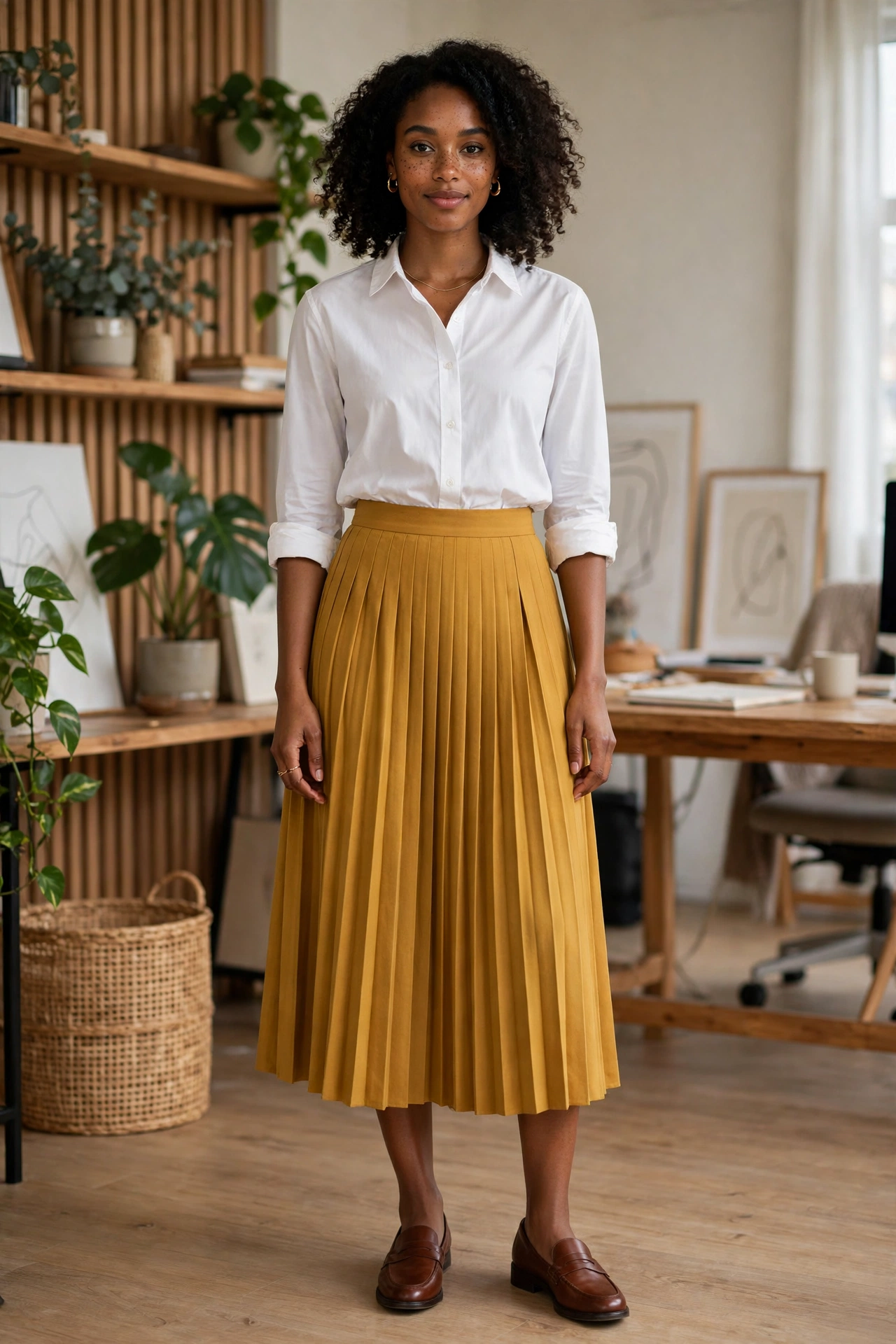
Skirt outfits beyond the pencil — A-line, pleated, midi wrap skirts — bring movement and variety to work dressing. Skirts pair with the entire knit and blouse wardrobe.
A-line skirts are the comfort professional’s pencil alternative. Movement is this category’s charm.
13. Trousers Work Outfit
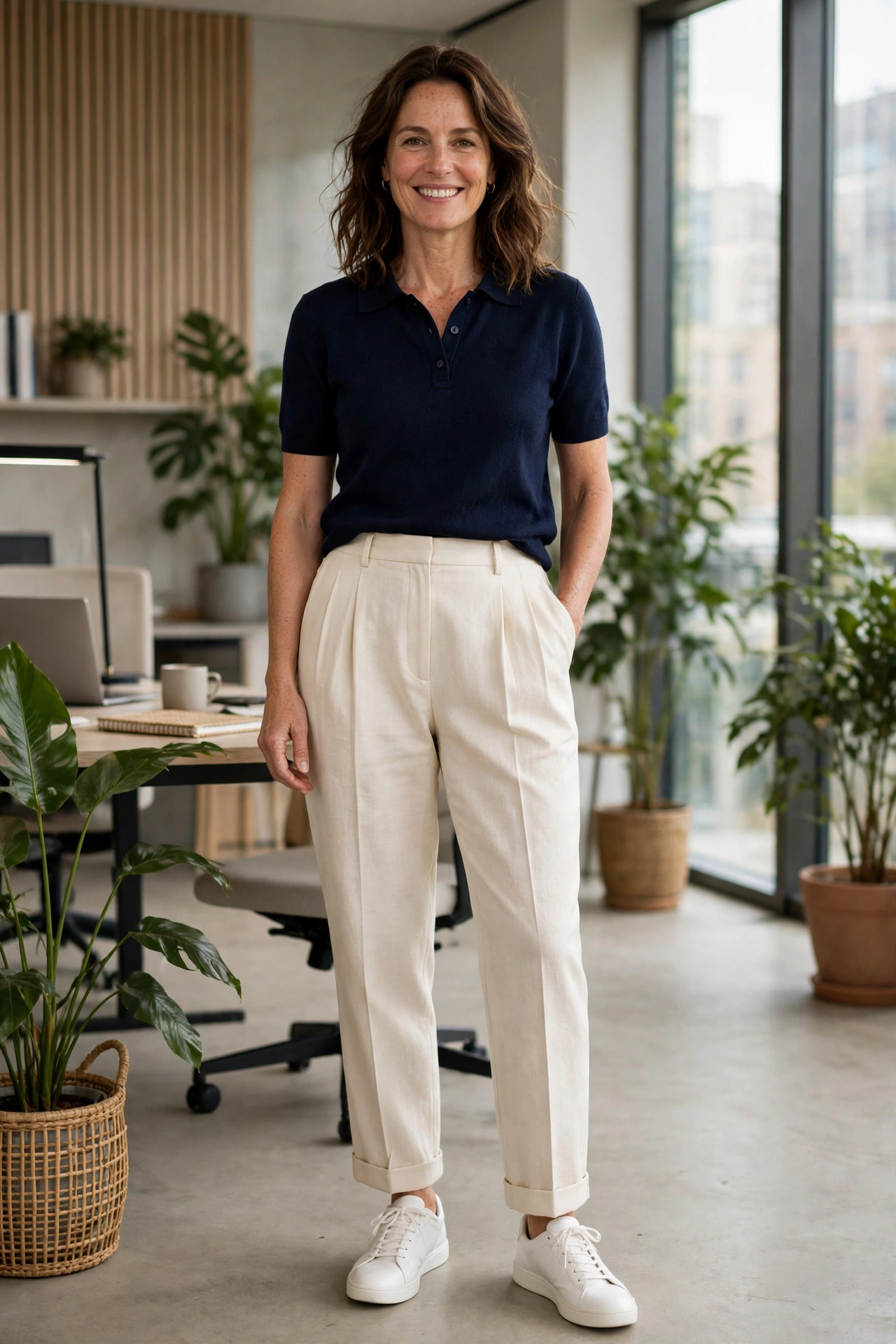
Tailored trousers are the modern work uniform’s base: straight, tapered, and wide legs in rotation, with knits and shirts above. Trousers done well are invisible competence — the outfit’s attention goes to the person.
Hem and fit are trousers’ whole story. This is the foundation piece of half this list.
14. Wide Leg Pants Work Outfit

Wide-leg trousers bring drama to work dressing: high waists, long lines, worn with fitted tops to balance the volume. Wide legs suit tall frames and anyone who stages an entrance at the office.
The wide leg must nearly touch the floor. This is the trouser as a statement.
15. Blouse Work Outfit
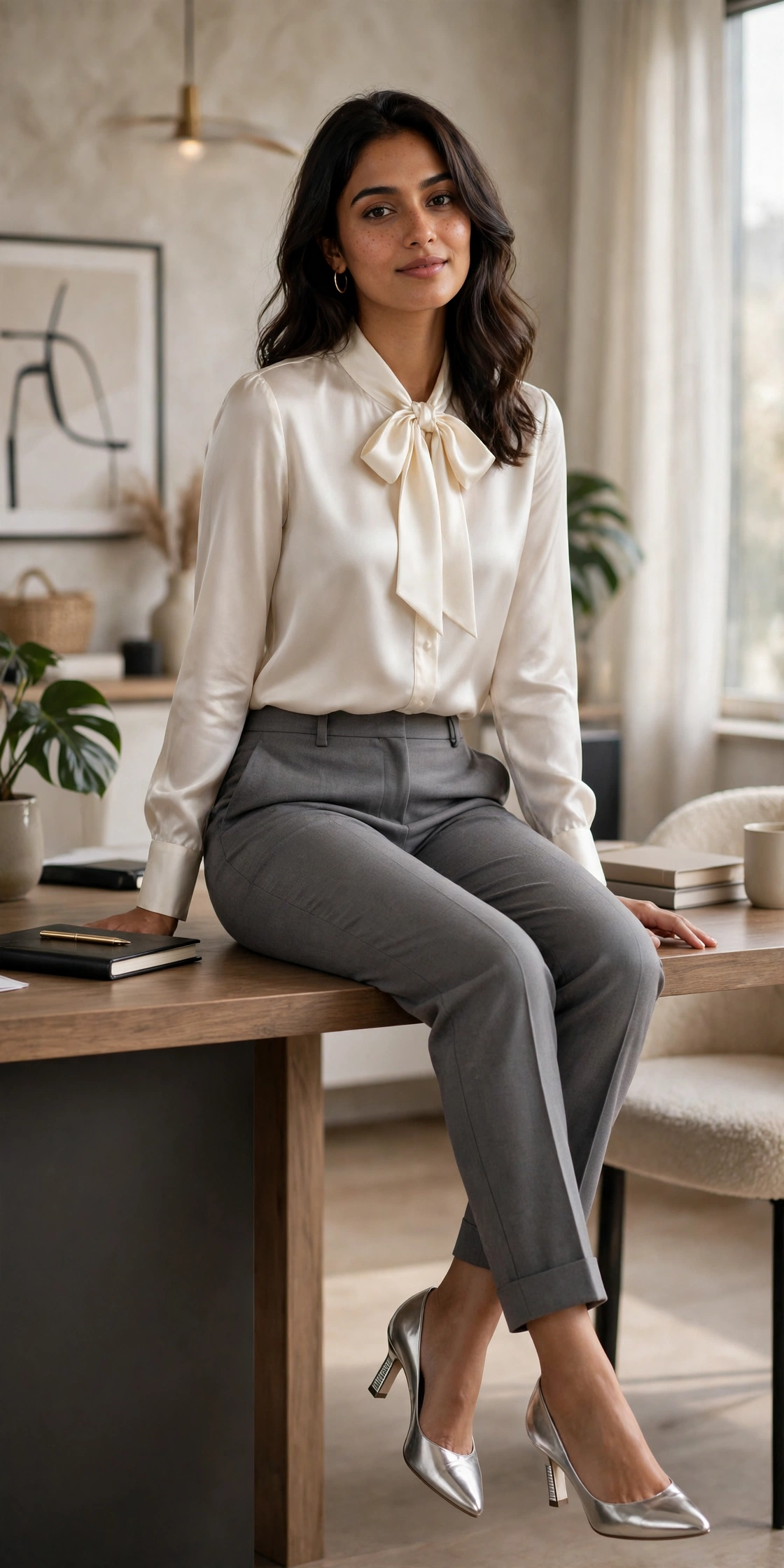
A blouse softens tailoring: silk, satin, and fine cotton blouses under blazers or tucked into skirts and trousers. Blouses are where work dressing keeps its colour and print.
One beautiful blouse rescues a plain suit. This is the wardrobe’s diplomat piece.
16. White Shirt Work Outfit

The white shirt is work dressing’s purest classic: crisp, structured, endlessly combinable — with suits, skirts, jeans on Fridays. A perfect white shirt is a career asset with a collar.
Collar and cuffs decide a white shirt’s quality. This piece is a blank page that always reads well.
17. Sweater Work Outfit

Fine sweaters — merino, cashmere, fitted knits — are winter work dressing’s comfort with polish: over shirts, under blazers, with skirts and trousers. Knit quality separates ‘sweater at work’ from ‘sweater day’.
Fine gauge, no pilling: the rules. A good knit is a blazer’s equal in cold months.
18. Cardigan Work Outfit
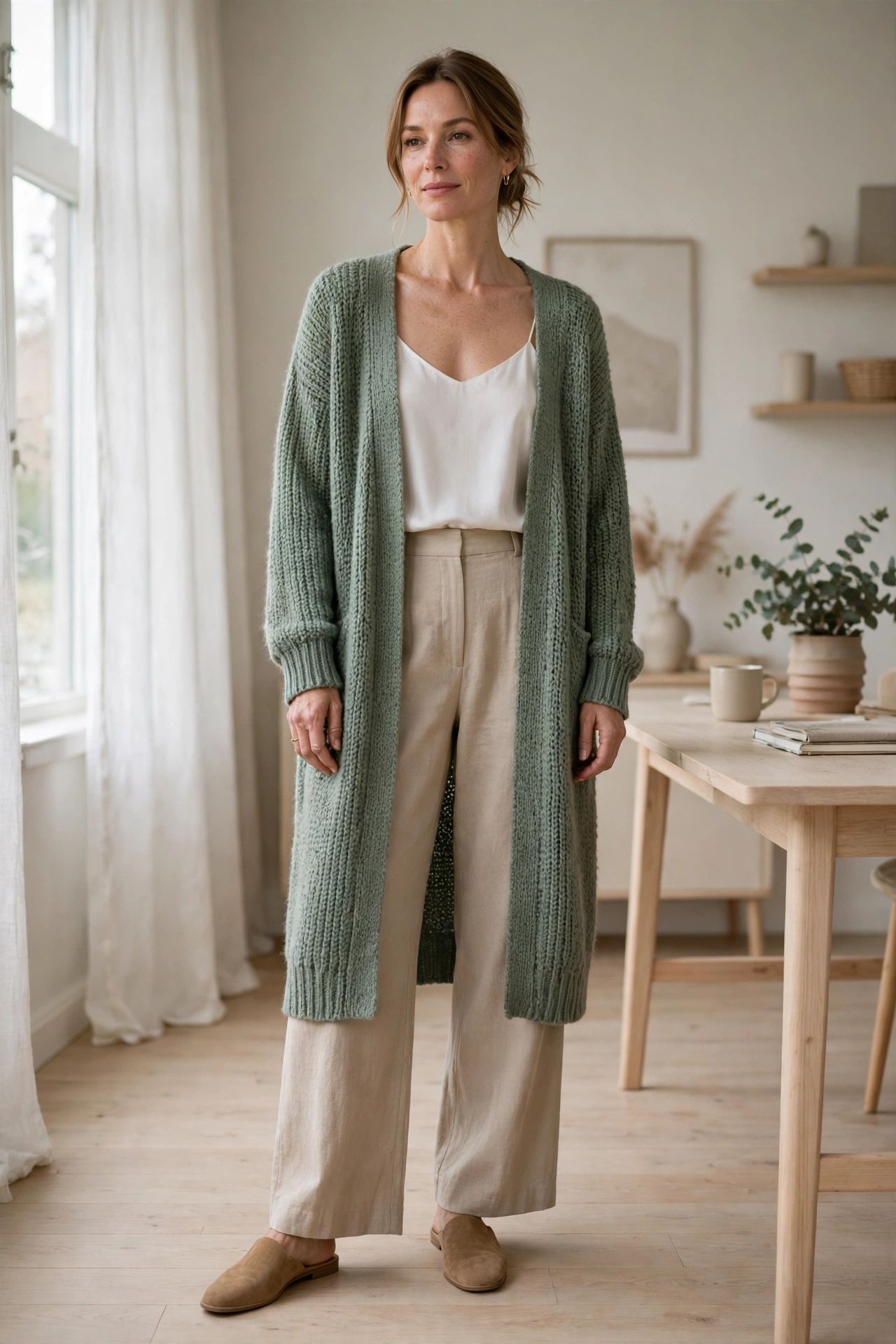
Cardigans are the office’s adjustable layer: for cold meeting rooms, softened formality, and the third-piece finish over dresses. Long cardigans read modern; cropped ones read classic.
A cardigan is climate control with buttons. Every desk deserves one on its chair.
19. Turtleneck Work Outfit

Turtlenecks are sleek work minimalism: under suits, with skirts, as the black base of a hundred combinations. The turtleneck is the creative-professional uniform and the cold office’s elegance.
Black turtleneck plus tailoring is a formula that has never failed. This is minimalism with a neckline.
20. Summer Work Outfit
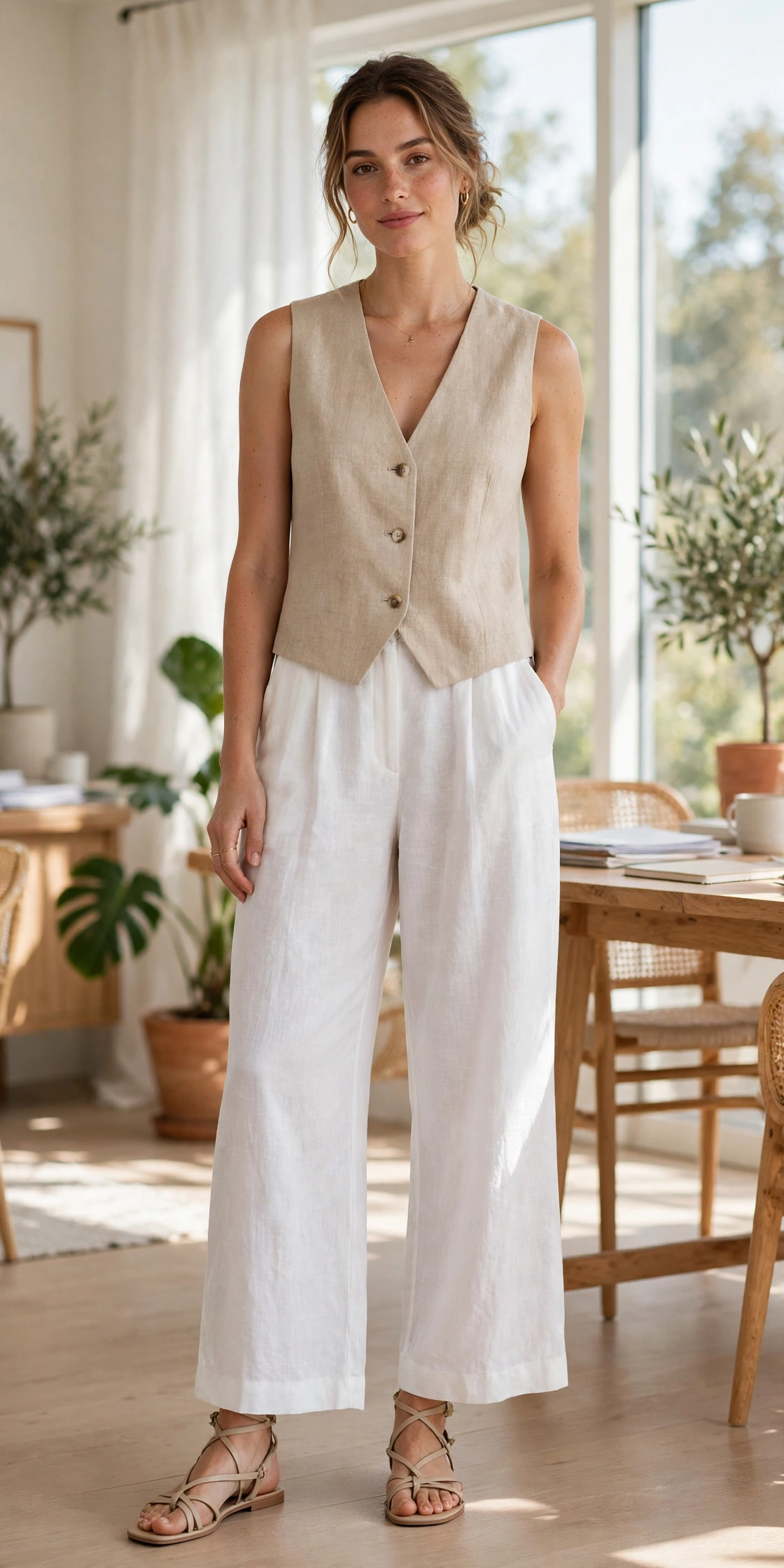
Summer work dressing fights heat with structure: breathable fabrics, sleeveless-with-blazer systems, lighter colours, sandals where codes allow. The summer professional looks cool because the outfit was engineered to be.
Linen blends and cotton carry summer. Layers handle the office air-conditioning’s ambush.
21. Winter Work Outfit

Winter work outfits layer for two climates (street and office): knit dresses, boots, wool trousers, coats that complete rather than cover the outfit. Winter is work dressing’s most expensive-looking season.
Boots are winter work’s foundation. Dress for the doorway moment — the coat comes off like a reveal.
22. Fall Work Outfit

Fall work dressing wears the transition: ankle boots, midi skirts, light knits under blazers, the rust-and-camel palette. Fall is the office wardrobe’s favourite season — every piece gets used.
Fall is layering’s showcase. This season’s work outfits walk through leaves to the office, beautifully.
23. Spring Work Outfit

Spring work outfits lighten: pastel and floral accents, trenches, loafers returning, knits getting finer. Spring is the wardrobe’s refresh — one new piece revives the rotation.
The trench is spring work’s signature layer. Lighten one element at a time as the season turns.
24. Casual Friday Outfit
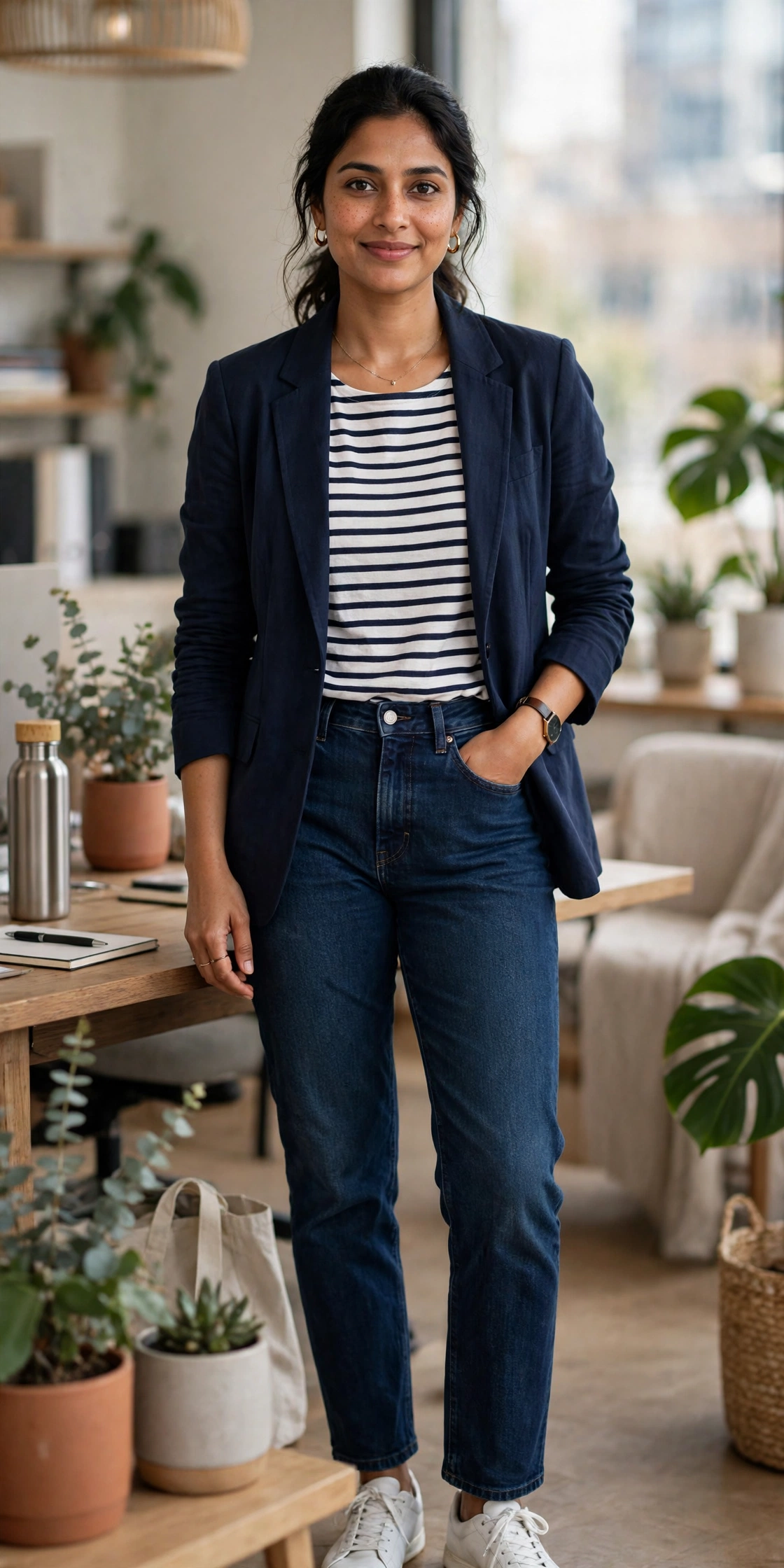
Casual Friday relaxes one notch, not five: dark jeans with a blazer, knit dresses, clean sneakers in creative offices. Friday’s trap is dressing for the weekend at 9am; the meeting you forgot is the reason not to.
One notch down, never two. Friday is still a workday in a costume of ease.
25. Smart Jeans Work Outfit
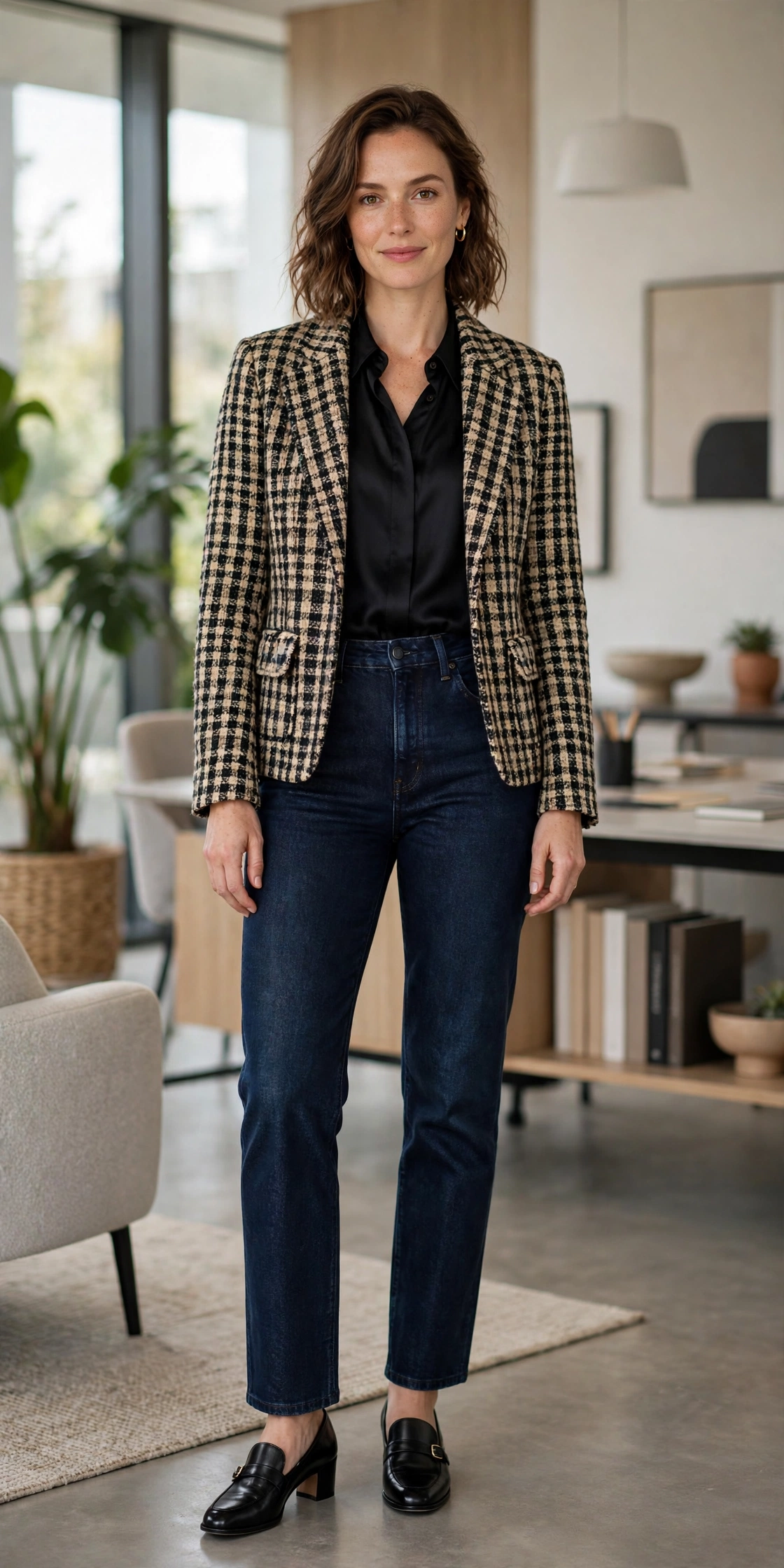
Smart jeans at work — dark, un-distressed, tailored-fit — pair with blazers, blouses and loafers for the modern business-casual standard. The top half must carry the professionalism.
Dark denim only; the wash is the dress code. Jeans plus blazer is this decade’s uniform.
26. All Black Work Outfit

All-black work dressing is monochrome authority: texture mixing (wool, silk, knit, leather) keeps it rich. Black suits every profession, every season, every bad morning.
Texture is all-black’s decoration. This is the wardrobe’s reset button.
27. White Work Outfit

White work outfits — white trousers, dresses, full ivory monochrome — are summer’s boldest professional statement and winter’s chicest (as winter white). White reads as confidence and seniority.
White demands fabric quality; cheap white confesses. Choose the meeting wisely; wear the white anyway.
28. Neutral Work Outfit

Neutral work dressing — beige, grey, navy, camel, white in combination — is the capsule wardrobe’s palette: everything matches, nothing shouts, quality shows. Neutrals are how small wardrobes look large.
Neutrals are a system, not a colour. This palette is the professional traveller’s secret.
29. Monochrome Work Outfit

Monochrome — one colour head to toe in varied textures — is work dressing’s most elongating, modern trick: navy on navy, grey on grey, cream on cream. Monochrome reads as intentional at any dress code.
Texture variety prevents the pyjama effect. One colour, worn completely, is a decision.
30. Colorful Work Outfit
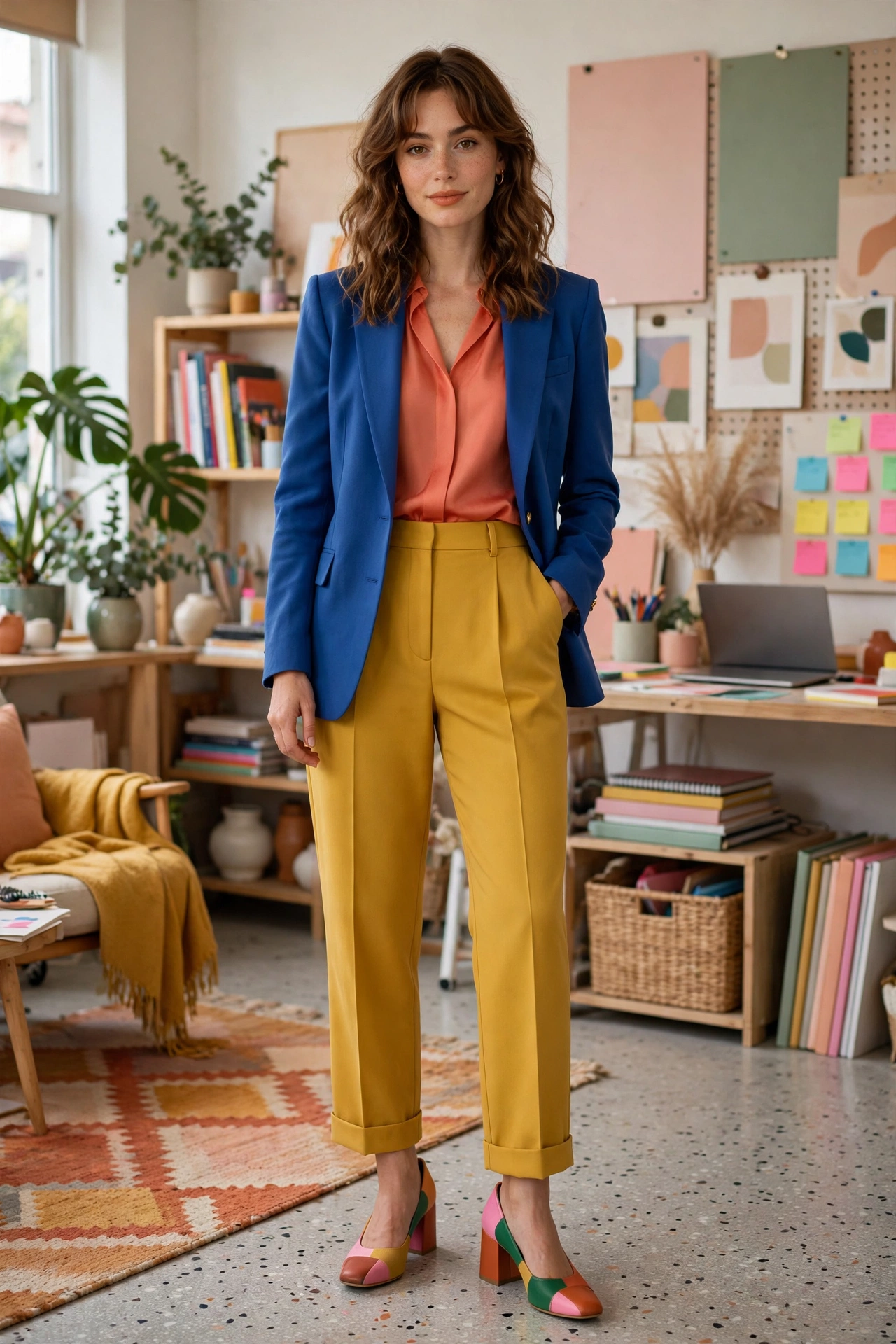
Colourful work dressing uses colour strategically: a jewel-toned dress, a coloured suit, a bright blouse under neutrals — memorability in competitive rooms. Colour is personal branding in fabric.
One colour statement per outfit is the professional dose. Colourful is confidence, rationed wisely.
31. Teacher Work Outfit

Teachers dress for movement, pockets, and washable everything: comfortable trousers and skirts, layers for classroom climates, shoes for ten thousand steps. Teacher style balances authority with approachability — the classroom’s dress code is unique.
Pockets are the teacher’s professional requirement. This outfit survives paint, playgrounds and parent evenings.
32. Healthcare Work Outfit

Healthcare work dressing spans scrubs-adjacent practicality to clinic professionalism: comfortable, hygienic, layerable, with shoes engineered for shifts. Where uniforms rule, the outfit’s expression lives in layers, shoes, and what frames the commute.
Comfort is clinical safety here. This register respects the hardest workdays in the list.
33. Job Interview Outfit

The interview outfit is researched dressing: one notch more formal than the company’s daily code, immaculate fit, nothing distracting, everything intentional. The interview outfit’s job is to be forgotten while the answers are remembered.
Dress for the job’s best day, not its average one. Fit and grooming outrank expense, always.
34. Big Presentation Outfit

Presentation outfits dress for the room’s back row: strong silhouettes, colours that read under stage lighting, nothing that rustles near microphones or distracts from the slides — including the presenter’s own fidgeting with it.
Wear the outfit you’ve presented in before, or its twin. Presentation day is no day for debuts.
35. Work Outfit for Women Over 40

Work dressing over 40 is authority’s wardrobe: quality fabrics, tailoring that fits the current body, colour confidence, and zero interest in dressing younger — dressing better instead. The over-40 professional’s style is the office’s benchmark.
Fit and fabric are the over-40 superpowers. This is experience, tailored visibly.
36. Work Outfit for Women Over 50

Over-50 work dressing continues the authority: elegant lines, beautiful colour near the face, comfort engineered invisibly into structure. Seniority styled well is a workplace’s visual leadership.
Colour near the face is the over-50 glow trick. This register is pure gravitas, worn lightly.
37. Plus Size Work Outfit
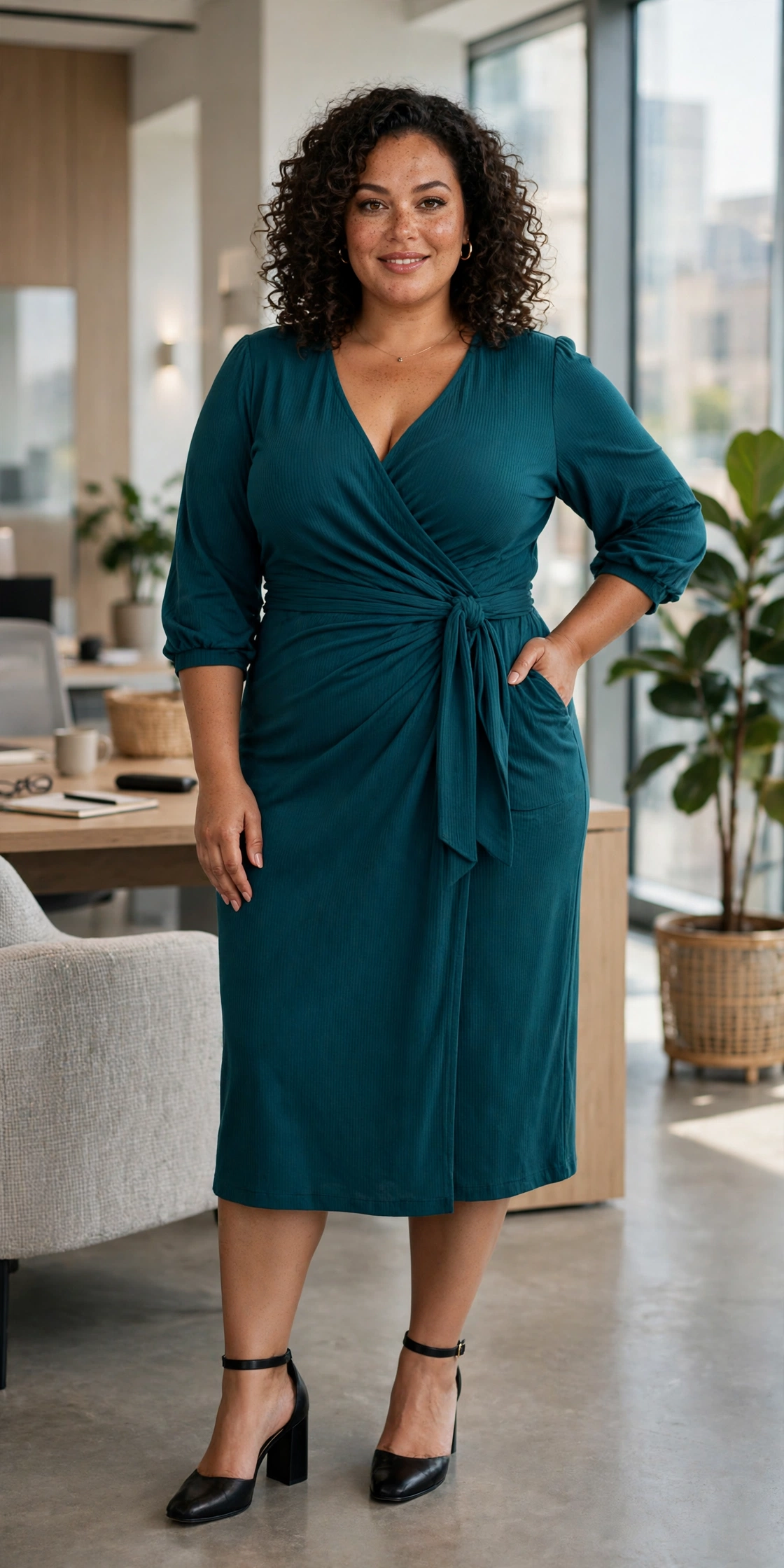
Plus-size work dressing is silhouette strategy: structured fabrics, defined waists, wrap and fit-and-flare shapes, tailoring that fits rather than covers. The rules are the list’s rules — fit, fabric, intention — at every size.
Never hide; tailor. Plus-size professional style plays by the same rules and wins the same way.
38. Petite Work Outfit

Petite work outfits mind proportion: cropped or full-length lines (nothing awkwardly mid-calf), defined waists, smaller-scale prints, heels or pointed flats for line. Petite dressing is scale editing — the same classics, calibrated.
Monochrome lengthens petites instantly. Proportion is this entry’s entire secret.
39. Maternity Work Outfit

Maternity work dressing adapts professionalism to a changing body: wrap dresses, empire lines, stretch-tailored trousers, blazers worn open — comfort without surrendering the register. Buy few, buy versatile, borrow the rest.
The blazer-open-over-dress formula carries two trimesters. This is professionalism, accommodating life.
40. Work From Home Outfit
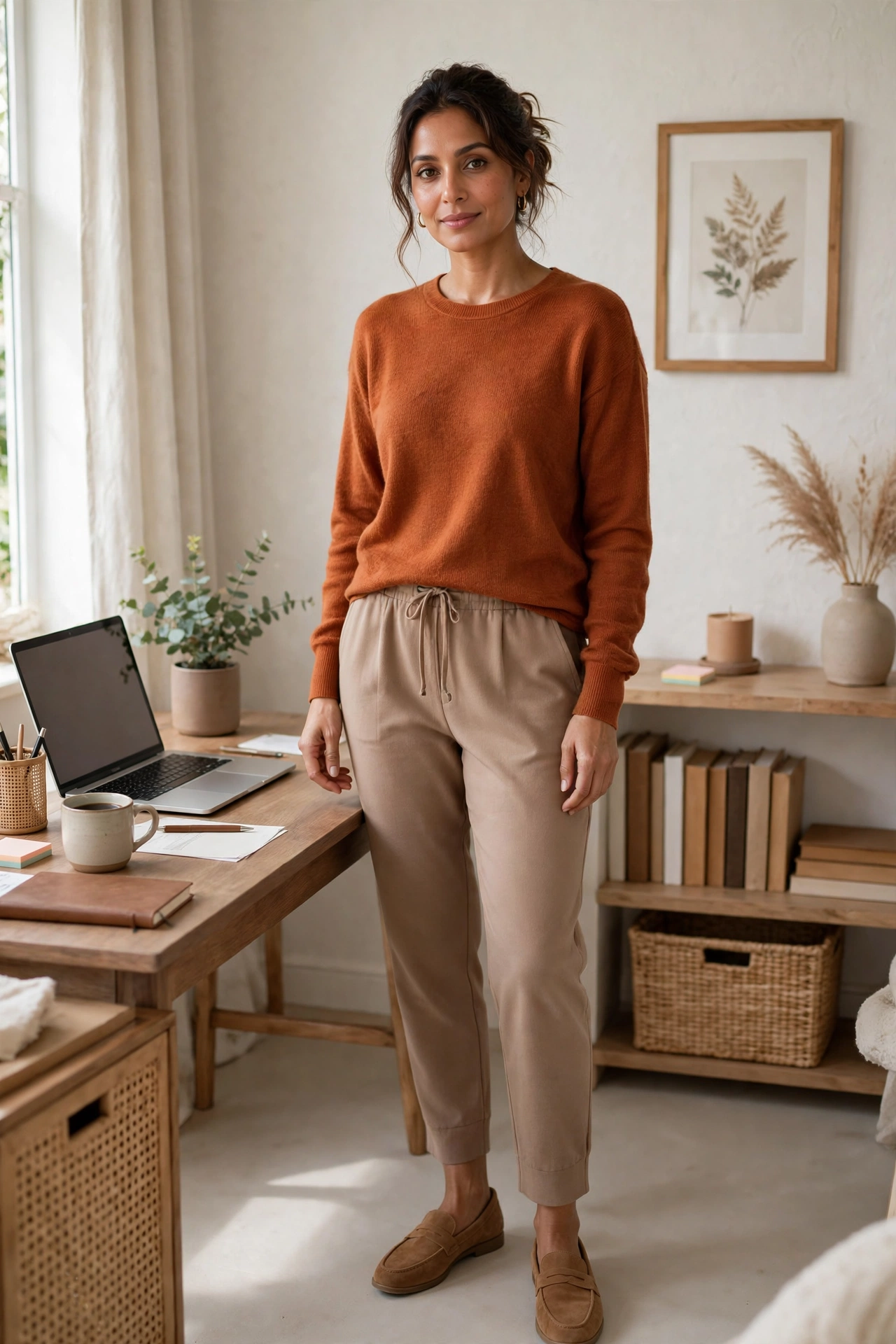
WFH dressing is waist-up professionalism with waist-down comfort: real tops, soft trousers, the outfit that keeps work and home psychologically separate. Dressing for home work is a boundary ritual, not a performance.
The WFH outfit’s audience includes its wearer’s own focus. Dressing is the commute now.
41. Video Call Work Outfit

Video-call dressing optimises the frame: colours that read on camera, necklines that sit well seated, no noisy jewellery or busy prints near the mic, grooming for the lens’s honesty. The call frame is the new office door.
Solid mid-tones are camera-kind. This outfit is a broadcast costume for the shoulders up.
42. Creative Office Outfit

Creative offices license expression: colour, vintage, designer pieces, sneakers with suits — the outfit as portfolio. Creative dressing still respects clients; the art is knowing which days are which.
Creative codes reward taste, not expense. This register is the wardrobe as a mood board, employed.
43. Corporate Work Outfit
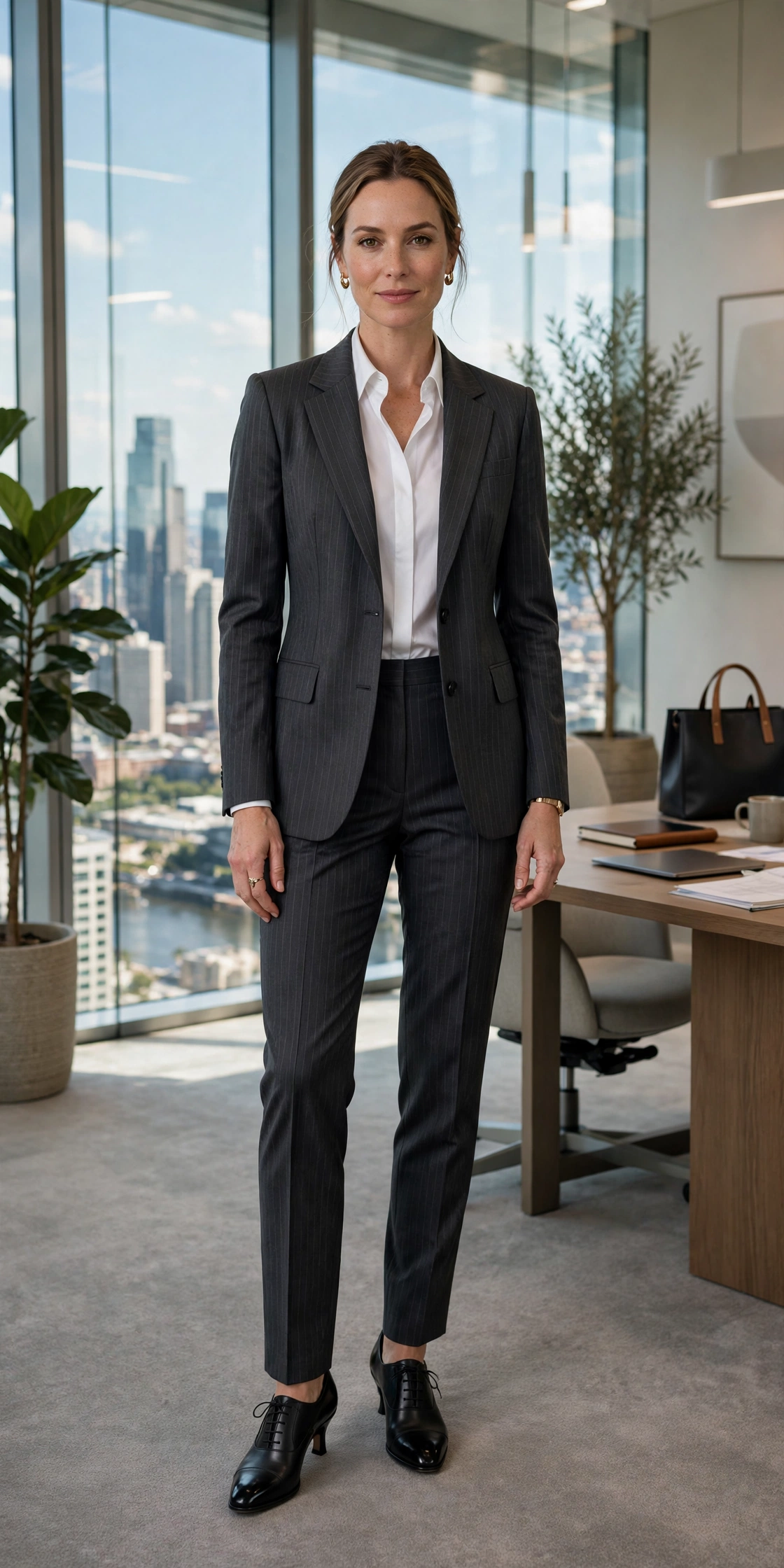
Corporate dressing is the formal system at scale: suits, conservative colours, immaculate grooming — the uniform of institutions. Within it, fit and fabric quality are the individual signatures.
Corporate is a team kit; wear it excellently. Small excellences are how individuals read inside systems.
44. Startup Work Outfit

Startup dressing is smart-casual’s frontier: jeans, knits, clean sneakers, the hoodie question answered by seniority. Startup style signals competence without hierarchy — until the investor meeting, when the blazer appears.
Keep one meeting-grade outfit at the office. Startup casual is a code too; read it accurately.
45. Retail Work Outfit

Retail dressing sells the store’s story while surviving the shift: comfortable shoes, brand-appropriate style, layers for door-side temperatures. Retail professionals are the outfit’s live advertisement.
Shoes are retail’s foundation — ten-hour honesty. This outfit works the floor as a model and a machine.
46. Banking Work Outfit
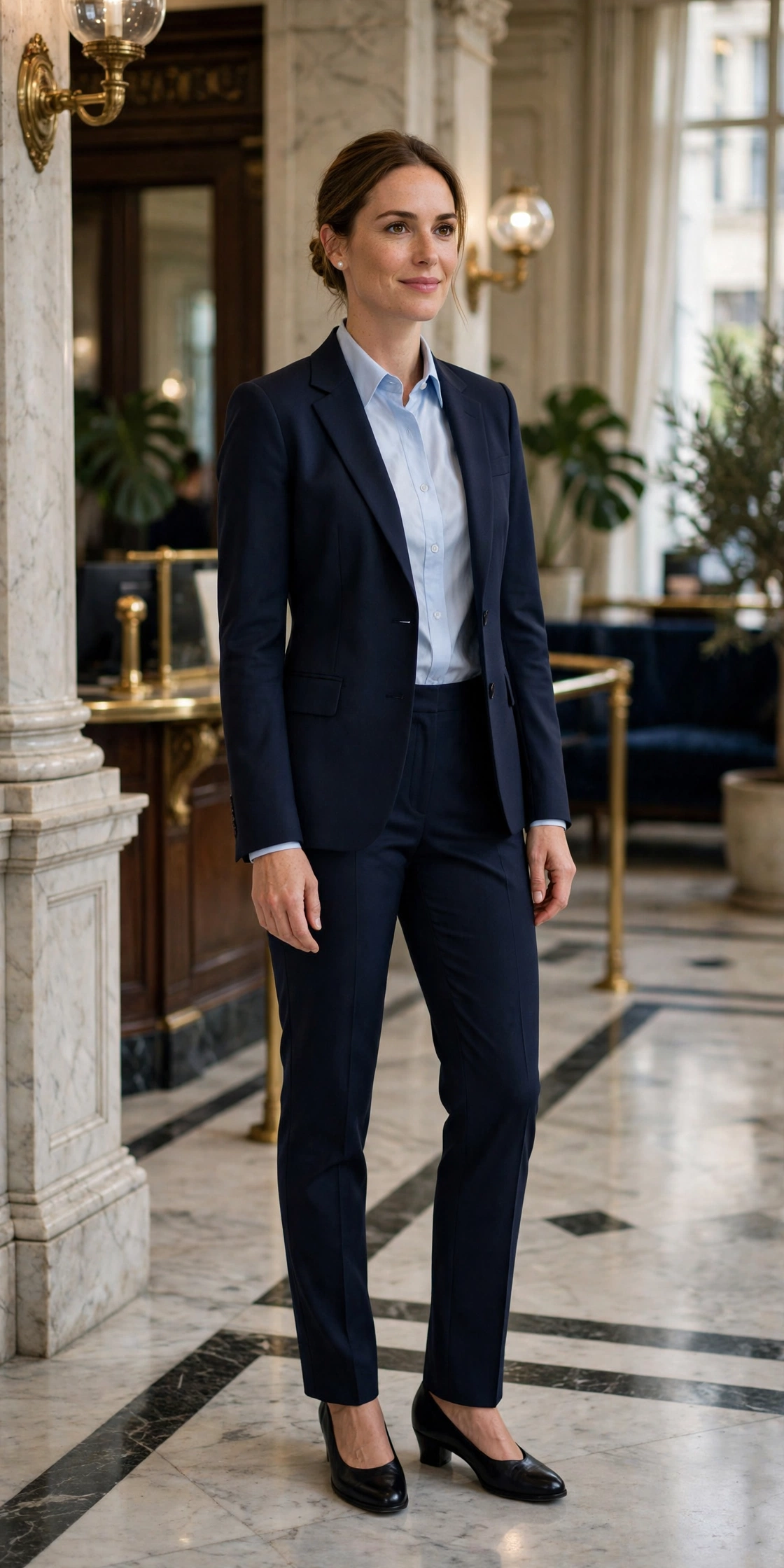
Banking dressing is finance’s conservatism: suits, muted colours, minimal jewellery, grooming as compliance. Banking style signals trustworthiness — the product being sold is trust.
In banking, the outfit is part of the vault’s door. Conservative is the brand; fit is the distinction.
47. Lawyer Work Outfit
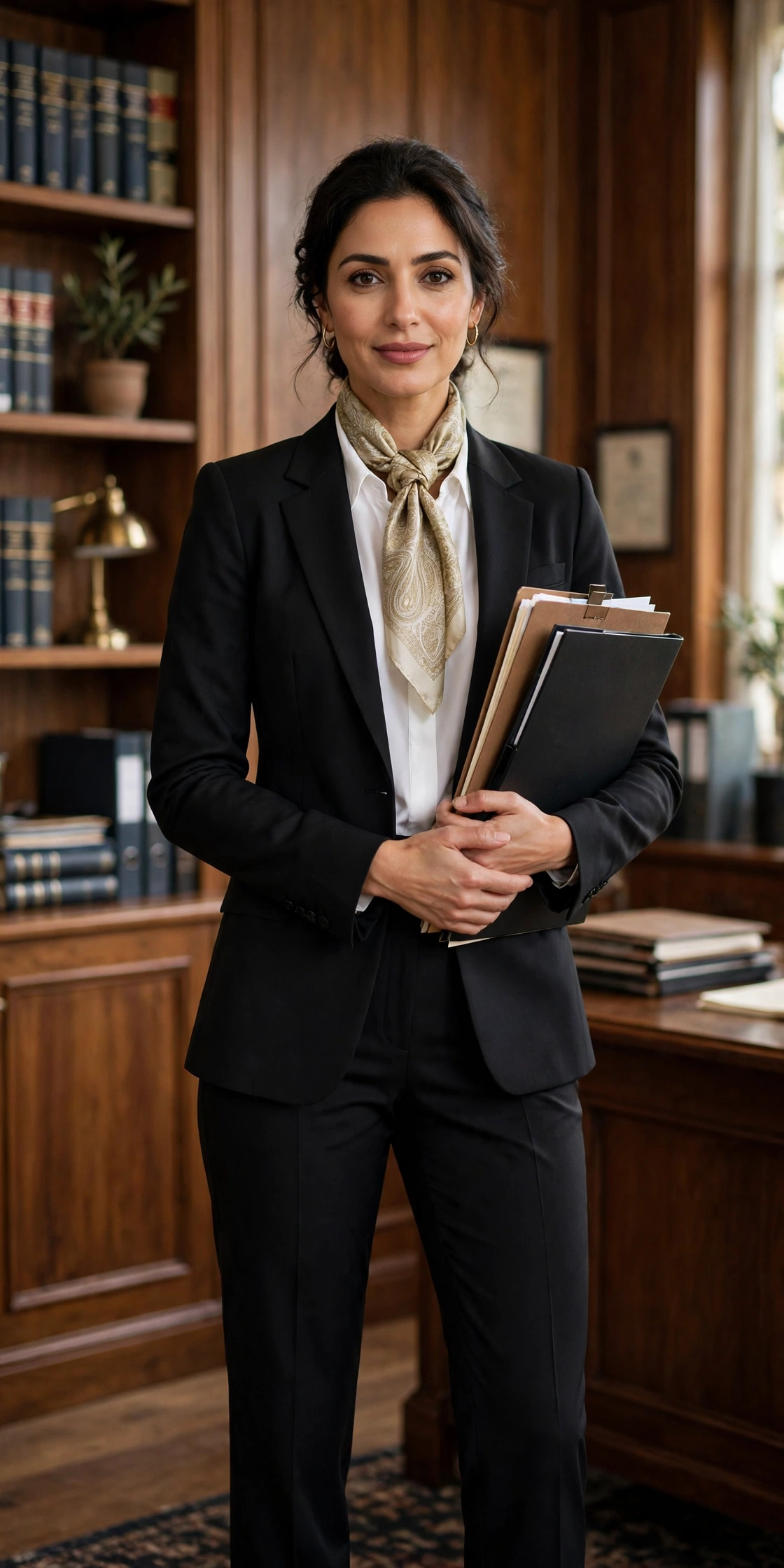
Legal dressing is advocacy’s costume: court-formal when required, office-tailored otherwise — dark suits, white shirts, nothing that argues with the argument. Lawyers dress for credibility with judges and clients alike.
The lawyer’s outfit should never be the room’s story. Authority whispers in wool.
48. Real Estate Agent Outfit
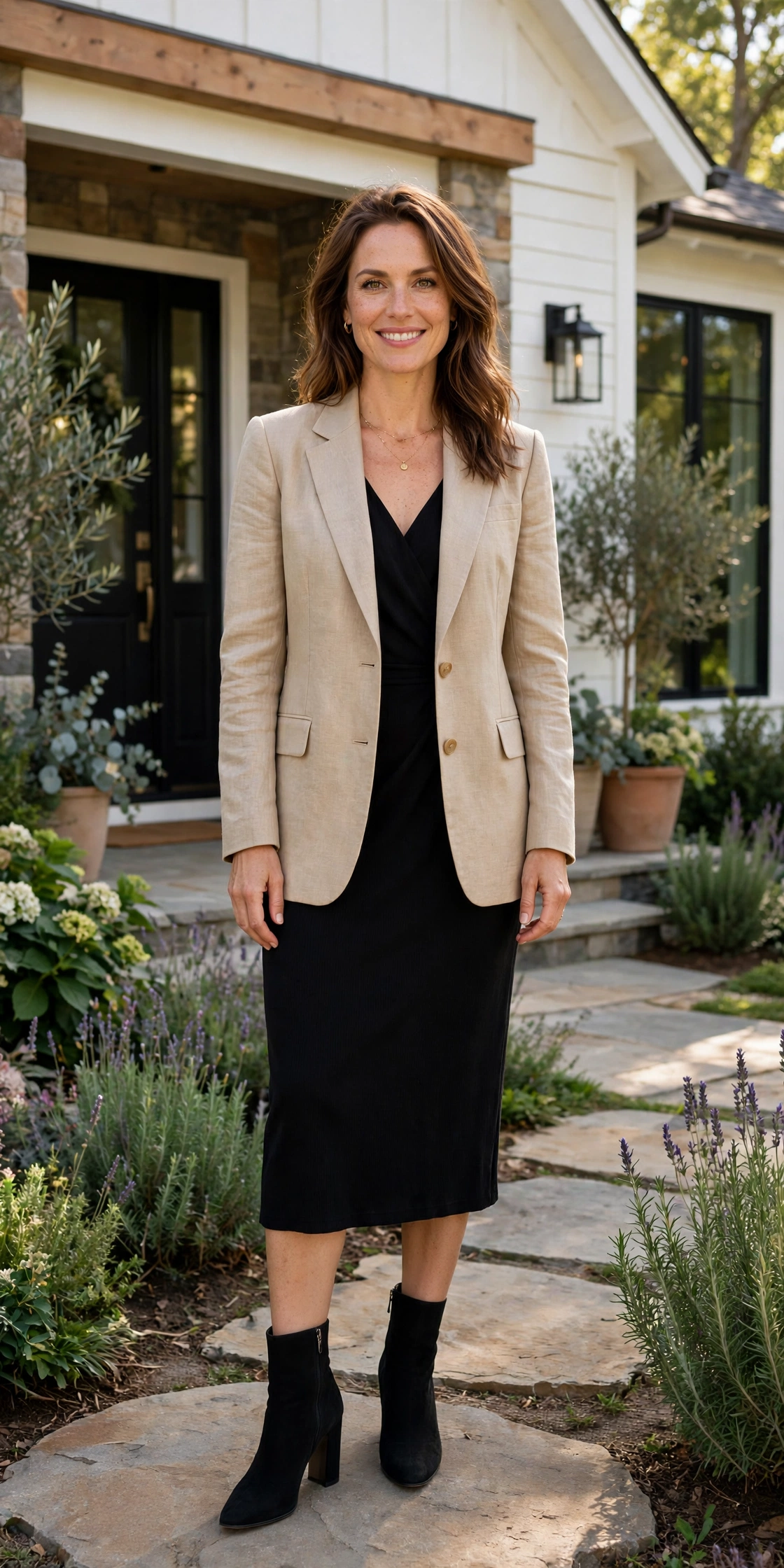
Real estate dressing balances polish with pavement: presentable for clients, walkable for properties, car-friendly fabrics, layers for houses at every temperature. The agent’s outfit is a mobile office’s uniform.
Shoes that tour houses gracefully are the agent’s secret. This outfit sells trust at the doorstep.
49. Jumpsuit Work Outfit
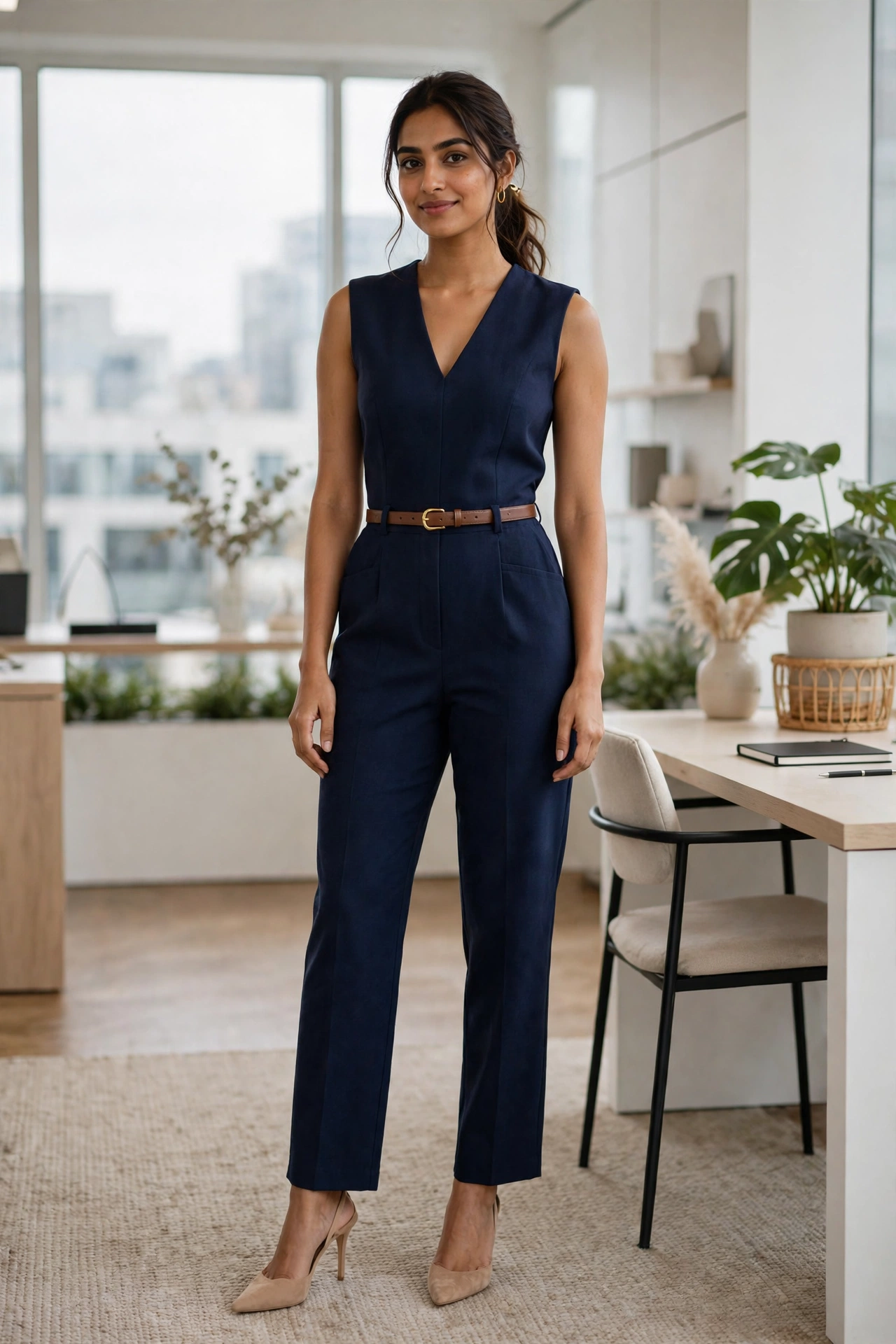
Tailored jumpsuits are the work dress’s trouser alternative: one piece, full polish, in navy, black and jewel tones. Jumpsuits suit creative-to-corporate codes depending on tailoring.
Waist fit decides the jumpsuit. This is efficiency with a zip.
50. Two Piece Work Outfit

Two-piece sets — matched top and trousers or skirt in knit or tailoring — are the modern co-ord uniform: coordinated instantly, separable later. Sets are the capsule wardrobe’s newest engine.
A set is three outfits minimum. This is work dressing’s smartest economics.
51. Vest Work Outfit
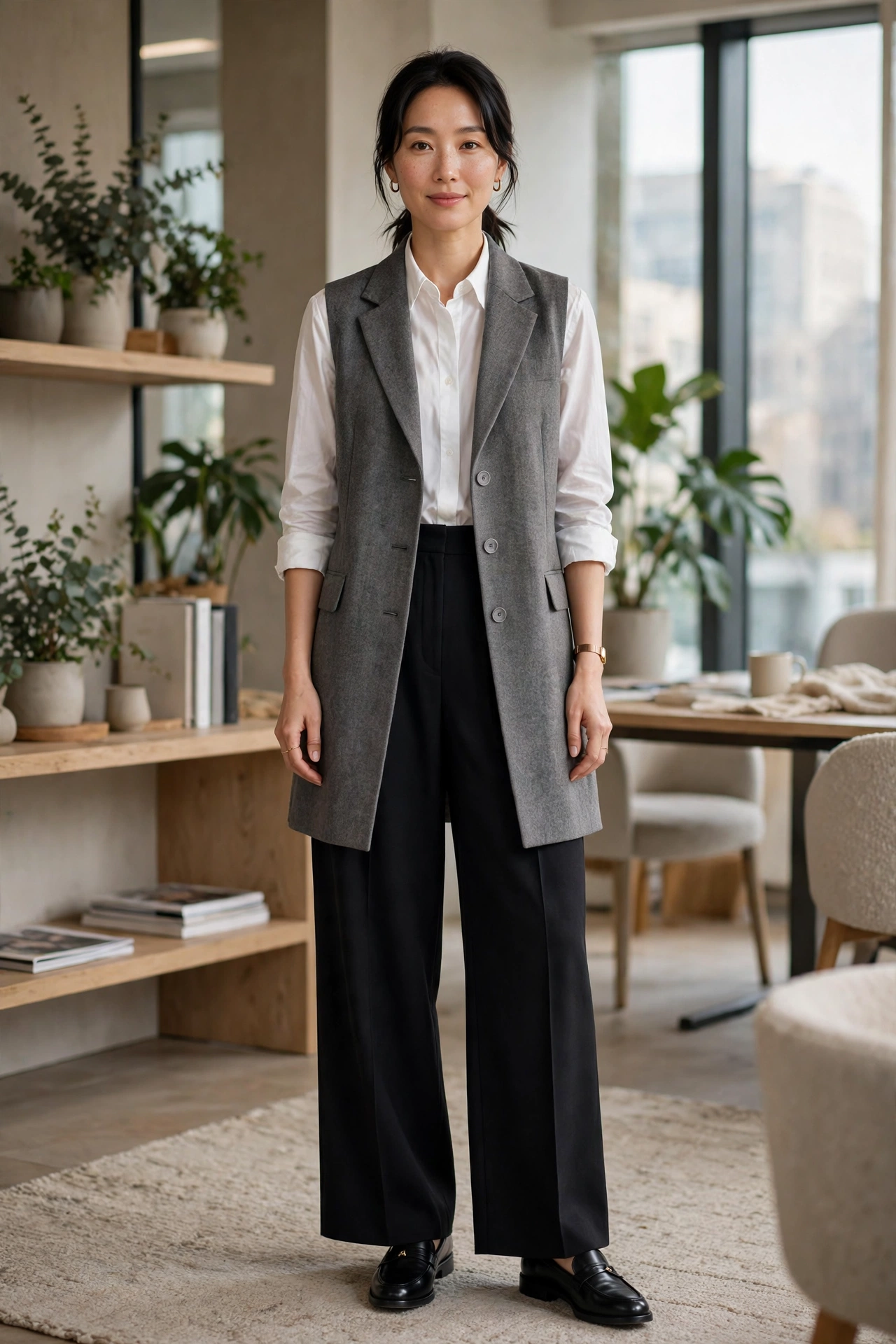
Vests (waistcoats) are work dressing’s trending third piece: over shirts, dresses, and bare arms in summer — tailoring’s detail at layer weight. The vest sharpens everything it joins.
A vest is a blazer’s lighter sibling. This piece is structure without the sleeves.
52. Trench Coat Work Outfit
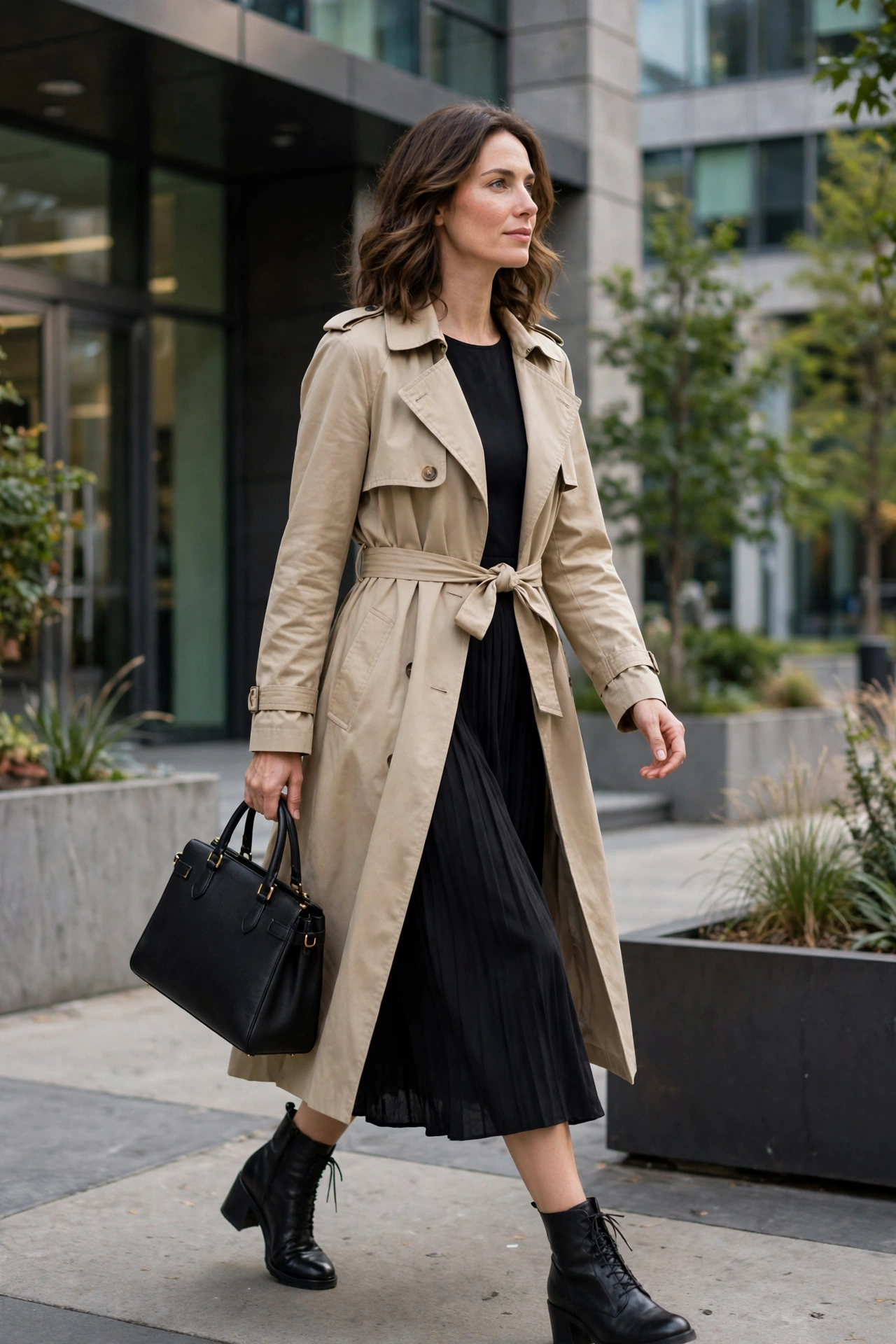
The trench is work dressing’s outer signature: over suits and dresses, in rain and transition seasons — the commute’s costume change into professionalism. A good trench outlasts careers’ chapters.
The trench is an outfit, not a cover. Buy it like tailoring, because it is.
53. Work Outfit with Heels

Heels change work dressing’s posture and register: pumps with trousers and dresses, the classic elevation. Heel height is a personal equation of commute, floor surfaces, and day length.
The heel you can cross the office in is the right heel. Elevation must survive the calendar.
54. Work Outfit with Flats
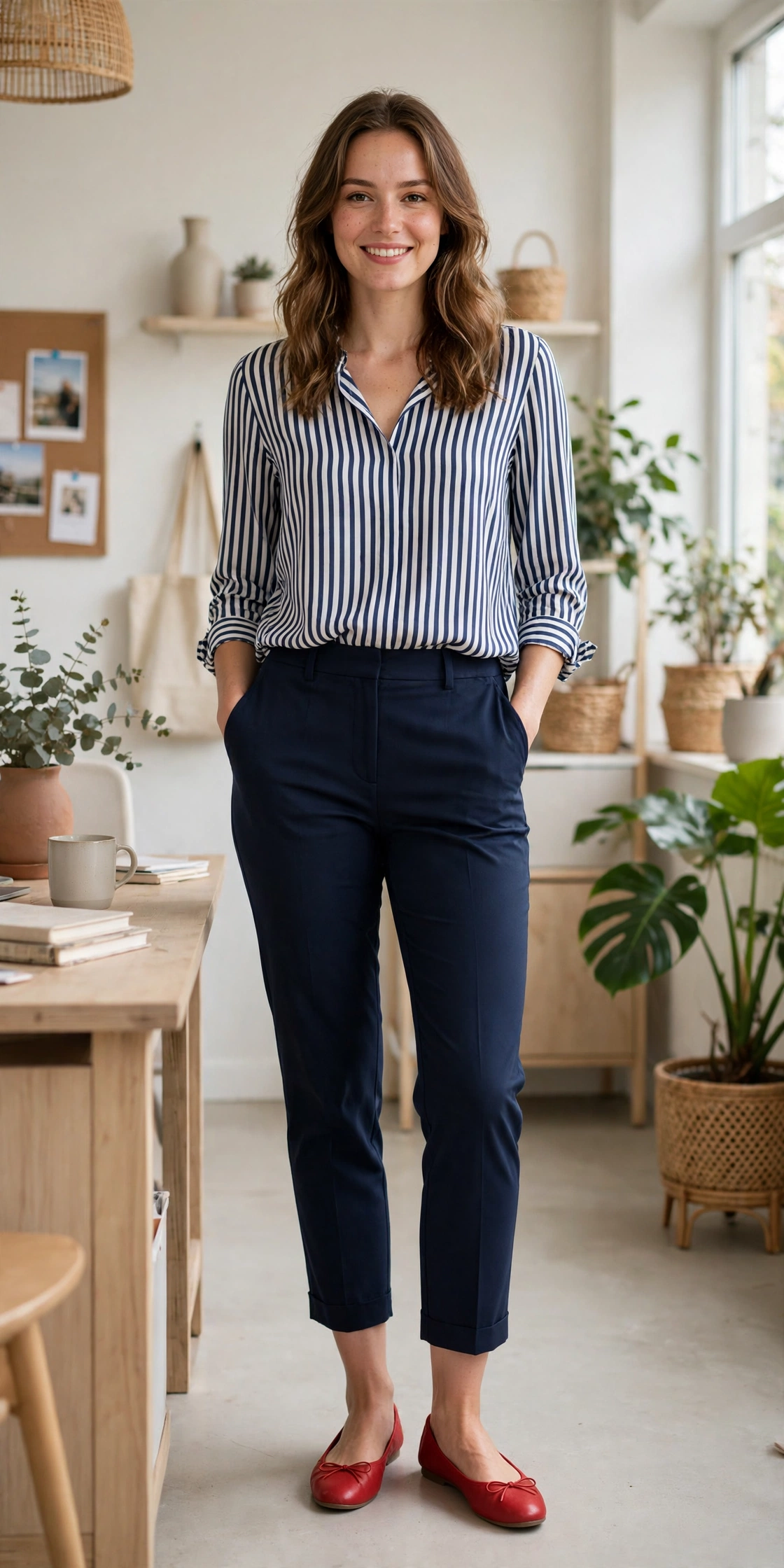
Flats — ballet, pointed, loafer-adjacent — are work dressing’s practical elegance: full polish at ground level. Pointed flats lengthen like heels for many outfits.
Flats are not a compromise; they are a style position. The pointed flat is the professional’s friend.
55. Work Outfit with Sneakers
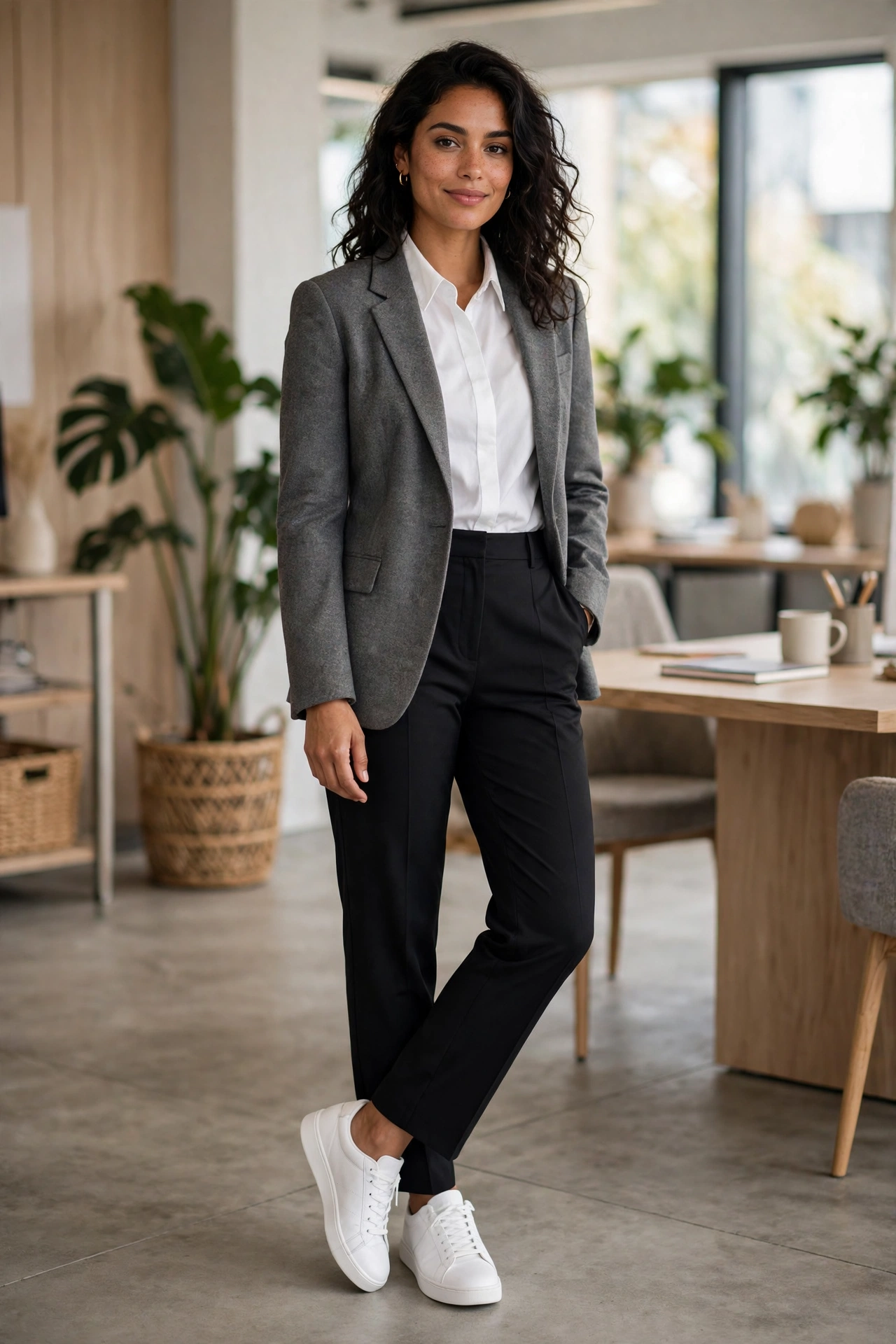
Clean sneakers at work — minimal, leather, unbranded-looking — are the modern code’s footwear frontier: with suits in creative offices, with everything on Fridays elsewhere. Sneaker acceptability is company-specific; read the room.
White leather sneakers are the office-safe maximum. This is comfort that passed the interview.
56. Work Outfit with Loafers

Loafers are work footwear’s current champions: polished like oxfords, easy like flats, in leather and suede for every register. Loafers complete trousers, skirts, and dresses impartially.
The loafer is the decade’s office shoe. Buy the leather pair once, wear for years.
57. Budget Work Outfit
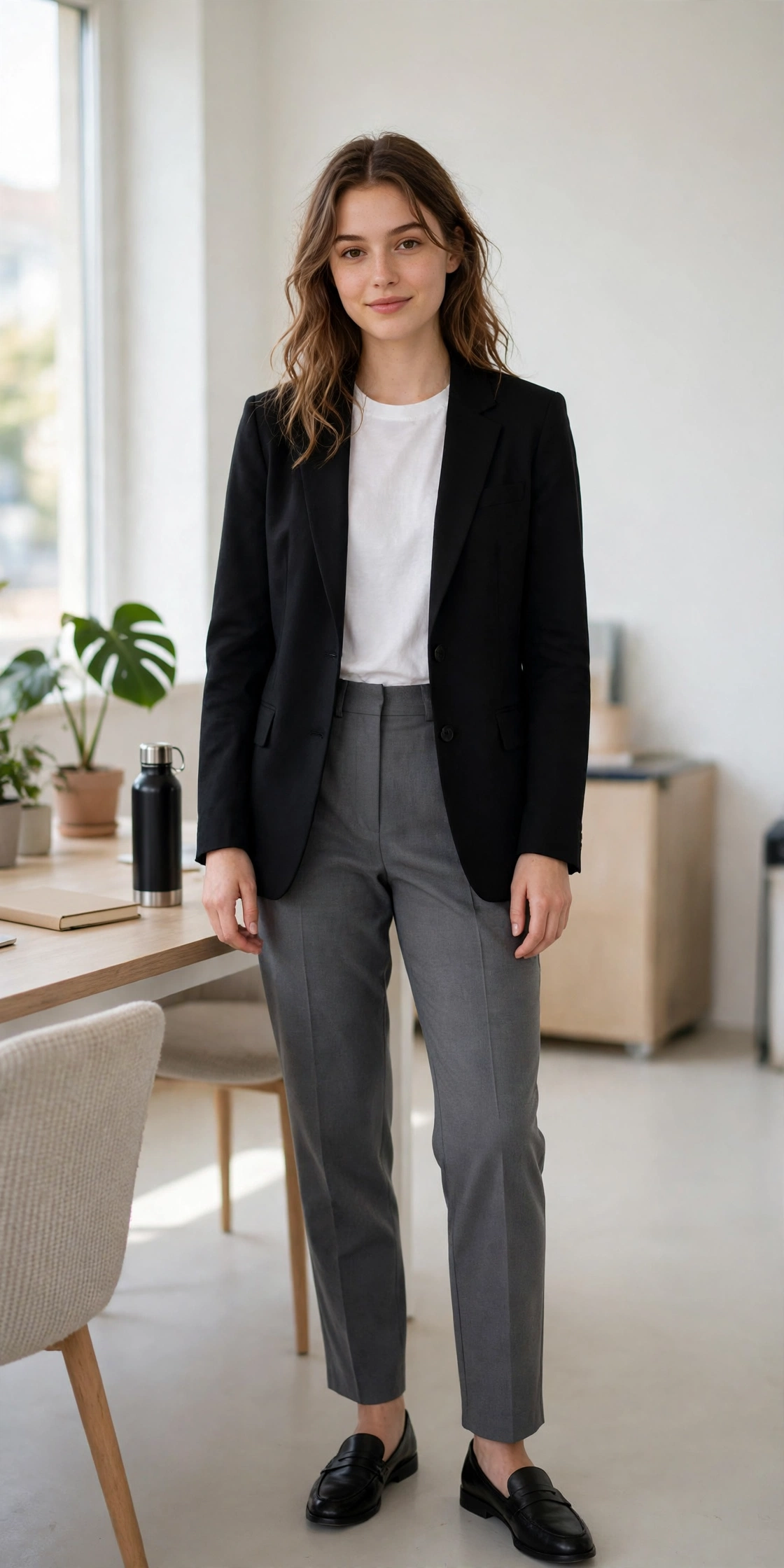
Budget work dressing is strategy: fewer, better basics; tailoring cheap pieces; capsule discipline; second-hand quality. Professional polish is a fit-and-care achievement, not a spending level.
A steamer and a tailor make budget outfits read expensive. Spend on fit, save on logos.
58. Capsule Wardrobe Work Outfit
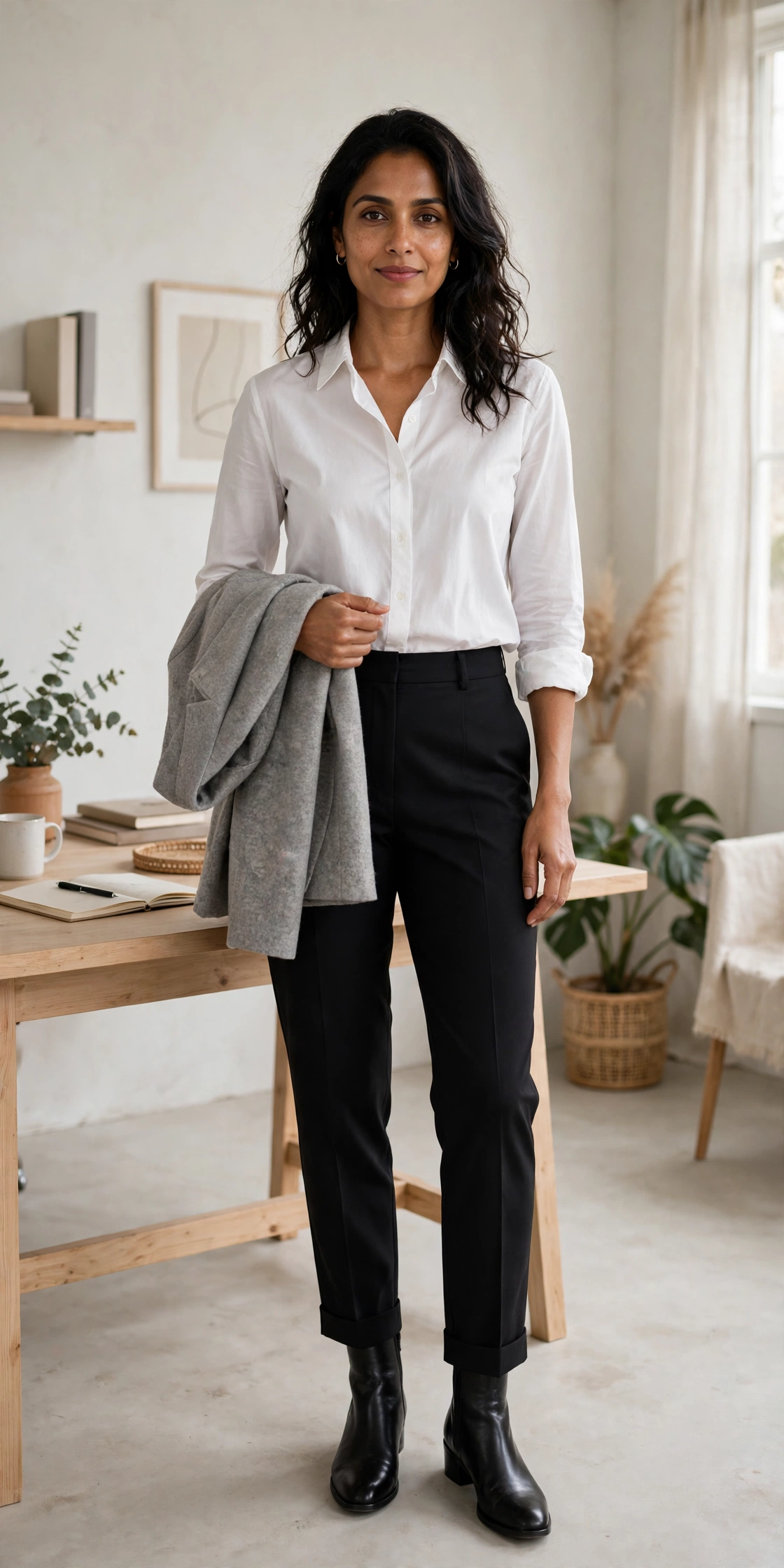
The capsule work wardrobe — 15–25 pieces, one palette, everything combinable — ends morning decisions and packing alike. Capsule dressing is minimalism with a career.
The capsule’s palette is its constitution. This system is the wardrobe as a well-run office.
59. Elegant Work Outfit

Elegant work dressing is the register perfected: fine fabrics, quiet colours, jewellery with restraint, grooming as part of the outfit — for leadership days and the profession’s formal occasions. Elegance is work style’s graduation.
Elegance photographs as authority. Choose this when the day might matter in frames.
How to Build a Work Wardrobe That Never Fails
Build on the classic base (trousers, skirt, blazer, white shirt, one work dress), in a neutral palette your shoes and bags already match, then add your profession’s specifics and one personality piece per season. Fit is the multiplier: tailor the basics, maintain them (steam, de-pill, re-heel), and keep one meeting-grade outfit always ready. The wardrobe that never fails is small, fitted, and boring in the best way — it makes the woman the interesting part.
Decide the combinations on Sunday; dress in minutes all week. Which of these 59 work outfits is going on your board first?